
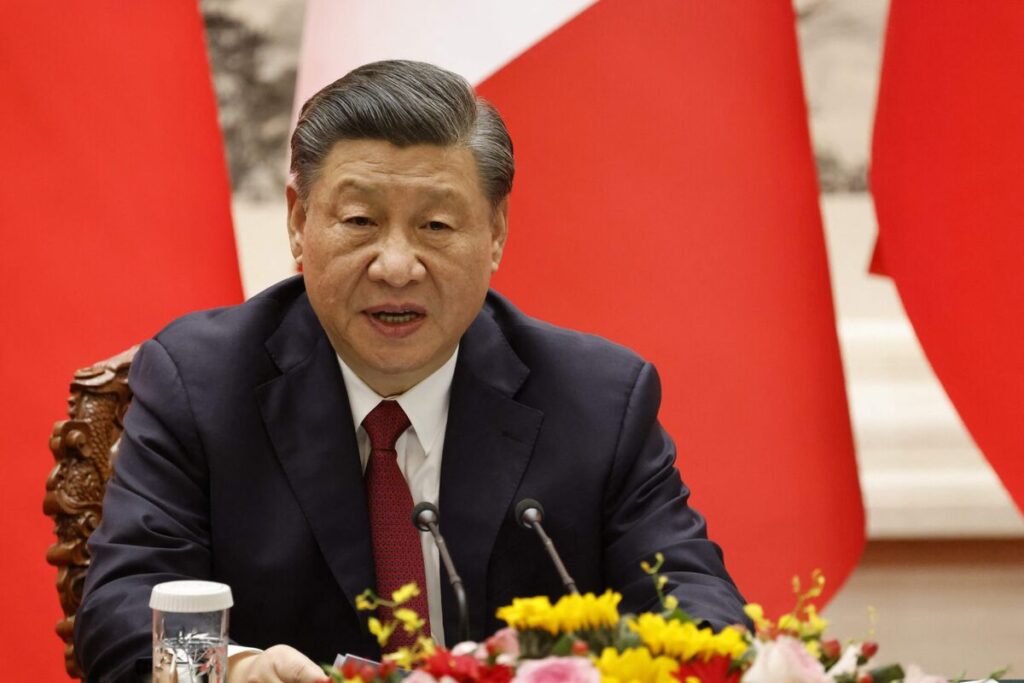

Xi Jinping Biography: a balanced look at how a purged official’s son rose from rural Shaanxi to become China’s most powerful leader since Mao. It examines his career, family, and lasting global influence.
Few living political figures command as much global attention as Xi Jinping. As General Secretary of the Chinese Communist Party and President of the People’s Republic of China, he leads the world’s second-largest economy. He also governs a nation of more than 1.4 billion people. This Xi Jinping biography traces a life that began in relative privilege. Political persecution later transformed his early years. Decades afterward, he returned to the center of power his family had once lost.
This biography explores Xi Jinping’s early life and education. It also examines the major milestones of his political career. In addition, it discusses his leadership style and the controversies surrounding his consolidation of authority. Understanding Xi’s rise matters far beyond China’s borders. Decisions made in Beijing influence global trade, technology, and international security.
Quick Facts About Xi Jinping Biography
| Full Name | Xi Jinping |
|---|---|
| Chinese Name | 习近平 |
| Date of Birth | June 15, 1953 |
| Age | 73 (as of 2026) |
| Birthplace | Beijing, China (ancestral home: Fuping County, Shaanxi) |
| Nationality | Chinese |
| Occupation | Politician, statesman |
| Political Party | Chinese Communist Party (joined 1974) |
| Current Position | General Secretary of the CCP; President of China; Chairman of the Central Military Commission |
| Years in Office | General Secretary/CMC Chairman since 2012; President since 2013 |
| Education | Tsinghua University — B.S. in Chemical Engineering (1979); doctorate in Marxist theory and ideological education (2002) |
| Parents | Xi Zhongxun (father, senior CCP revolutionary and former vice premier); Qi Xin (mother) |
| Spouse | Peng Liyuan (m. 1987); previously married to Ke Lingling (early 1980s, divorced) |
| Children | One daughter, Xi Mingze (b. 1992) |
| Religion | None publicly documented; officially an atheist as required of CCP members |
| Estimated Net Worth | Officially near $1 million; independent estimates of family-linked wealth range from roughly $700 million to over $1 billion, though none is verified (see Net Worth section) |
| Known For | Consolidating power, anti-corruption campaign, Belt and Road Initiative, ending term limits, assertive foreign policy |
Xi Jinping Biography: Early Life and Childhood
Born into China’s Revolutionary Elite
Xi Jinping was born on June 15, 1953, in Beijing, the third child and elder son of Xi Zhongxun’s second marriage to Qi Xin. His father was no ordinary parent. Xi Zhongxun had helped found a Communist guerrilla movement in northern China and later rose to vice premier, placing the family firmly within China’s revolutionary elite. During his early years, Xi enjoyed a comfortable childhood inside Beijing’s exclusive compounds for high-ranking officials and attended the Beijing Bayi School alongside the children of other military and government leaders.
The Cultural Revolution Changes Everything
That privilege collapsed abruptly. In 1963, when Xi was just ten years old, his father fell out of favor with the Communist Party and was purged. Conditions worsened during the Cultural Revolution. In 1966, the Bayi School closed, prompting Xi to transfer to Beijing No. 25 School. By 1968, his father had been imprisoned.
During this period, student radicals ransacked the family home, while Xi’s mother was forced to publicly denounce her husband. The turmoil also led to personal tragedy when Xi’s sister, Heping, died by suicide. Xi later recalled learning of her death while digging an air-raid shelter, quietly stepping away so no one would witness his grief.
Life in Liangjiahe
At age 15, Xi was sent to the village of Liangjiahe in Yan’an, Shaanxi Province. The move was part of Mao Zedong’s Down to the Countryside Movement. Liangjiahe was among China’s poorest regions. Xi initially struggled to adjust to rural life. After attempting to return to Beijing, authorities arrested him for desertion. He was then sent to a labor camp, where he dug ditches.
Relatives later encouraged Xi to return to Liangjiahe. He eventually spent seven years living in a traditional yaodong cave dwelling. During that time, he performed demanding manual labor and faced frequent food shortages. He was also repeatedly rejected by the Communist Youth League. Those rejections reflected his father’s political downfall. Xi later said these experiences shaped his resilience, worldview, and political character.
Education
Xi’s formal education was disrupted by political upheaval. The Cultural Revolution interrupted his secondary schooling in Beijing. During his teenage years, he learned mainly through farm work and labor projects in Liangjiahe. Villagers reportedly respected him for his endurance and problem-solving abilities.
In 1975, as political conditions improved, Xi entered Tsinghua University in Beijing. It is one of China’s most prestigious universities. He enrolled as a “worker-peasant-soldier” student. This category admitted candidates through workplace recommendations instead of standard entrance examinations. Xi studied chemical engineering and graduated in 1979.
While pursuing his political career, Xi later returned to Tsinghua University for graduate study. In 2002, he earned a doctorate in Marxist theory and ideological education. His degree came from the university’s Institute of Humanities and Social Sciences. Such credentials were common among senior Communist Party officials of his generation. The doctorate also strengthened Xi’s ideological standing as he advanced within the party.
Entry into Politics

Xi’s formal party membership came only after eight rejected applications, largely a consequence of his father’s political troubles. He finally joined the Chinese Communist Party in 1974, while still in Liangjiahe, and briefly served as the village’s party branch secretary — his first taste of grassroots leadership.
After graduating from Tsinghua in 1979, Xi took a position as personal secretary to Geng Biao, then vice premier and secretary-general of the Central Military Commission — a role that had previously been held by his father’s associates and gave him early exposure to national military and political affairs. In 1982, seeking to build credibility away from Beijing’s elite circles, Xi left this comparatively comfortable post to become deputy party secretary of rural Zhengding County in Hebei province, rising to county party secretary within a year. This decision to work his way up through the provinces, rather than trade on his father’s name, became a defining feature of his early career and helped him earn a reputation for prudence and party discipline.
Rise to National Leadership
see also: http://novaline.com.ng
Donald Trump: The Life and Career of America’s 45th and 47th President
From Hebei, Xi moved through a string of increasingly senior provincial posts over more than two decades. In 1985 he became vice mayor of Xiamen in Fujian province, later serving as Fujian’s governor from 1999 to 2002, where he focused on cross-strait investment and infrastructure. He then led Zhejiang province as party secretary and governor from 2002 to 2007, restructuring its industrial base toward more sustainable development.
A pivotal break came in 2007, when a pension-fund corruption scandal toppled Shanghai’s leadership. Xi was installed as the city’s party secretary to steady its finances and image — a post he held only briefly before being elevated that same year to the Politburo Standing Committee, the CCP’s apex decision-making body. In 2008 he became Vice President of China and was placed in charge of preparations for the Beijing Summer Olympics, significantly raising his international profile. In 2009 he also became vice chairman of the Central Military Commission, positioning him as heir apparent to Hu Jintao.
Xi’s ascent culminated in November 2012, when he was named General Secretary of the Chinese Communist Party and Chairman of the Central Military Commission. In March 2013, he added the presidency of China to his titles, completing a rare trifecta of party, state, and military leadership. He is now recognized as the paramount leader of China. A further consolidation followed in 2018, when China’s National People’s Congress abolished presidential term limits — a change many observers characterized as clearing the way for Xi to remain in power indefinitely. He secured a third term as president in 2023, becoming the first Chinese president to serve beyond two terms.
Leadership Style
Xi’s governing approach has been defined by centralization. Rather than ruling through the collective consensus that characterized his immediate predecessors, Xi has concentrated decision-making authority in himself and a tightly controlled inner circle, often described by analysts as ending the “collective leadership” model that shaped Chinese politics after Mao Zedong’s death.
Domestically, Xi has prioritized what he calls “high-quality development” over unchecked GDP growth, pushing back against what he terms “GDP heroism” in favor of goals like environmental sustainability, technological self-reliance, and reduced inequality. His signature anti-corruption campaign, launched shortly after he took power, has ensnared prominent officials across the party, government, and military, and has doubled as a mechanism for removing political rivals. On national security, Xi has expanded the reach of the party into virtually every institution of Chinese life, while military modernization and restructuring of the People’s Liberation Army have remained constant priorities throughout his tenure.
In foreign affairs, Xi has broken from Deng Xiaoping’s famous doctrine of “keeping a low profile,” instead pursuing what Chinese officials call “major-country diplomacy.” He has argued that China is already a “big power” and has overseen a more assertive, at times combative, diplomatic posture that observers have dubbed “wolf warrior diplomacy,” particularly prominent in the late 2010s and early 2020s. Xi frequently invokes the idea that the world is undergoing “great changes unseen in a century,” framing this as a moment of both opportunity and risk for China as Western influence recedes.
Major Achievements in Xi Jinping Biography
Supporters and independent analysts alike credit Xi’s tenure with several significant accomplishments, even as some come with important caveats.
Poverty Alleviation
Xi made eradicating extreme poverty a signature goal, launching a nationwide campaign in 2015 and declaring “complete victory” in 2021, with close to 100 million people said to have been lifted out of poverty during his time in office. Officials say this met the United Nations’ 2030 Sustainable Development Agenda poverty target roughly a decade ahead of schedule, and UN Secretary-General António Guterres publicly acknowledged the scale of the achievement. Critics note, however, that China’s own poverty threshold is lower than the World Bank’s international line, and that tens of millions of Chinese citizens still lived on very modest incomes even after the campaign’s official conclusion.
Belt and Road Initiative
Announced in 2013, the Belt and Road Initiative has grown into the largest infrastructure investment program by a single power since the Marshall Plan, spanning much of Africa and Eurasia and becoming central to Chinese foreign policy. Proponents point to World Bank estimates that increased trade through the initiative could lift millions out of extreme poverty and meaningfully boost global GDP by 2040, while critics have raised concerns about debt sustainability in participating countries.
Technology, Infrastructure, and Military Modernization
China’s space program has expanded significantly under Xi’s leadership. The country’s high-speed rail network has also grown rapidly. Renewable energy capacity has increased substantially. His government has also promoted self-sufficiency in advanced semiconductors and artificial intelligence. The People’s Liberation Army has undergone extensive modernization and restructuring. At the same time, a long-running anti-corruption campaign removed dozens of senior military officers.
Challenges and Criticisms
Xi’s tenure has also drawn sustained criticism from international human rights organizations, foreign governments, and independent researchers. Human Rights Watch’s World Report 2026 describes an intensifying crackdown across China throughout 2025, with the government imposing strict ideological conformity and loyalty to Xi and the party. The treatment of ethnic and religious minorities has drawn particular scrutiny: a landmark United Nations report concluded that abuses against Uyghurs in Xinjiang may amount to crimes against humanity, and rights groups say several hundred thousand Uyghurs remain imprisoned with no accountability yet delivered. Tibetans and members of unregistered churches have also faced severe restrictions, and Hong Kong’s pro-democracy movement has been effectively suppressed following the 2020 National Security Law and a subsequent 2024 security ordinance.
Beyond human rights, analysts have pointed to Xi’s centralization of authority — including the 2018 removal of term limits — as a departure from the power-sharing norms established after Mao’s death, raising long-term questions about succession planning and institutional resilience. Regulatory crackdowns on China’s technology, real estate, and private tutoring sectors during his tenure have also drawn criticism from investors and economists concerned about their chilling effect on private enterprise. Internationally, Xi’s assertive posture in the South China Sea, along the Sino-Indian border, and toward Taiwan has heightened tensions with the United States and regional neighbors, with cross-strait relations deteriorating notably after 2016. These are contested and evolving issues, and readers seeking the fullest picture should consult multiple independent sources, since Beijing disputes many of these characterizations.
Personal Life
Xi’s first marriage, to Ke Lingling — daughter of a former Chinese ambassador to the United Kingdom — took place in the early 1980s and ended in divorce a few years later; the couple had no children. In September 1987, Xi married Peng Liyuan, a celebrated folk and opera singer who had built a prominent career performing for the People’s Liberation Army, eventually reaching the rank of major general within its cultural corps. Peng’s family reportedly had reservations about the match at first, given the Xi family’s political baggage at the time, but the marriage endured, even as the couple’s demanding careers frequently kept them apart in the early years.
The couple’s only child, daughter Xi Mingze, was born in 1992. She studied psychology at Harvard University, graduating in 2014, and has since kept an unusually low public profile for the child of a head of state, rarely appearing at official events or in state media. Publicly, Xi is known for a reserved, disciplined demeanor; he has spoken of enjoying swimming, reading history and literature, and watching soccer, though as with most senior Chinese leaders, detailed information about his private hobbies and lifestyle remains limited by design.
Xi Jinping’s Political Philosophy
In October 2017, delegates at the 19th National Congress of the Communist Party voted to enshrine “Xi Jinping Thought for the New Era of Socialism with Chinese Characteristics” into the party constitution — a doctrine now more commonly shortened to Xi Jinping Thought. The ideology was subsequently written into China’s national constitution as well, a symbolic elevation that placed Xi’s status alongside towering predecessors Mao Zedong and Deng Xiaoping.
At its core, Xi Jinping Thought emphasizes unwavering party leadership over all aspects of Chinese society, a vision of “national rejuvenation” that positions China as reclaiming its historic global standing, and a commitment to what officials describe as “socialism with Chinese characteristics for a new era.” The doctrine holds that the leadership of the Chinese Communist Party is the most essential feature of socialism with Chinese characteristics and the greatest strength of the country’s political system. In foreign affairs, this framework extends into what’s known as Xi Jinping Thought on Diplomacy, which underpins the assertive, major-power diplomatic posture discussed earlier in this profile.
Global Influence
Xi’s decade-plus in power has coincided with China’s emergence as an assertive global actor across economic, diplomatic, and military dimensions. Beyond the Belt and Road Initiative, Xi has unveiled a series of global frameworks — the Global Development Initiative in 2021, the Global Security Initiative in 2022, the Global Civilisation Initiative in 2023, and the Global Governance Initiative in 2025 — each designed to expand China’s influence over international norms and institutions. He also spearheaded the founding of the Asian Infrastructure Investment Bank in 2015, positioning it as an alternative to Western-dominated institutions like the World Bank.
Alongside Russia, Xi’s China has deepened engagement with the Global South, partly as a hedge against Western sanctions pressure, while relations with the United States have grown increasingly competitive across trade, technology, and security. Recent trade tensions have seen tariff disputes escalate and partially unwind through legal challenges in US courts, even as China’s export volumes have continued to grow. Xi’s periodic meetings with world leaders, his hosting of major summits, and China’s expanding footprint in African, Latin American, and Central Asian infrastructure and technology markets have all reinforced Beijing’s growing weight in global affairs — a trend likely to continue shaping international relations well beyond his own tenure.
Xi Jinping Biography: Net Worth
Determining Xi Jinping’s net worth is notoriously difficult, and any figure should be read with significant caution. Xi’s official annual state salary is reported at approximately ¥152,121 RMB, or roughly $22,000 USD — a strikingly modest figure by the standards of major world leaders, especially considering the US president’s $400,000 salary. Based on this and other disclosed records, some outlets place his personal net worth at around $1 million.
The far more contested question involves wealth linked to Xi’s extended family. A Congressional Research Service report from April 2024 estimated Xi’s “hidden wealth” at roughly $700 million, though the report itself acknowledges considerable uncertainty, and other published estimates have ranged as high as $1.2 billion or more. Investigations, including reporting tied to the Panama Papers, have suggested that assets are typically held not by Xi himself but by relatives — most often cited is his older sister, Qi Qiaoqiao, and her husband — reflecting a broader pattern in which senior Chinese officials rarely hold assets in their own names. Because China has no equivalent of the financial disclosure requirements common in many democracies, no independent real estate registry, and a tightly controlled domestic press, no confirmed figure for family wealth exists, and claims in either direction should be treated as estimates rather than verified fact.
Awards and Recognition
As a sitting head of state, Xi has received a range of ceremonial honors from foreign governments and institutions during state visits, including honorary “keys to the city” from various host nations. In 2024, a major ring road in Phnom Penh, the Cambodian capital, was renamed “Xi Jinping Boulevard” in recognition of Cambodia–China relations. Domestically, Xi has presided over — and in some cases personally awarded — the country’s highest honors to others, including the July 1 Medal, the Chinese Communist Party’s highest honorary distinction, established in 2017 and first bestowed on 29 individuals in a 2021 ceremony that Xi personally led. He has also presided over national commendation ceremonies honoring individuals and communities for contributions to China’s poverty-alleviation campaign.
Interesting Facts About Xi Jinping Biography
Early Life and Personal Background
- Xi lived for seven years in a yaodong, a traditional cave dwelling carved into a hillside, during his time as a “sent-down youth” in Shaanxi Province.
- He applied to join the Communist Youth League and, later, the Communist Party multiple times before being accepted, largely because of his father’s political disgrace.
- Xi studied chemical engineering as an undergraduate, giving him a technical educational background before entering politics.
Family and Personal Life
- His wife, Peng Liyuan, was already one of China’s best-known singers long before Xi gained international prominence. For many years, she was arguably the more recognizable public figure.
- Xi’s father, Xi Zhongxun, was purged twice during his political career but later became an advocate for economic reforms and reportedly criticized the government’s response to the 1989 Tiananmen Square protests.
- Xi’s daughter, Xi Mingze, attended Harvard University under strict privacy measures and has largely remained out of the public eye since graduating.
Political Career and Leadership
- In 2012, while serving as China’s vice president, Xi revisited Iowa, returning to the rural American community he had first visited decades earlier.
- The 2018 constitutional amendment that removed presidential term limits made Xi the first Chinese head of state in decades without a fixed constitutional limit on the presidency.
- Xi authored Getting Out of Poverty, a book based on his experiences leading poverty-alleviation initiatives in Ningde, Fujian Province, during the late 1980s.
- He is the first General Secretary of the Chinese Communist Party to have been born after the founding of the People’s Republic of China in 1949.
Global Influence
- Xi’s signature foreign policy project, the Belt and Road Initiative, has been described as one of the largest cross-border infrastructure investment programs since the Marshall Plan.
- Despite leading the world’s second-largest economy, Xi’s official government salary is considerably lower than the salaries earned by many Western heads of state.
Frequently Asked Questions About Xi Jinping Biography
Who is Xi Jinping?
Xi Jinping is a Chinese politician who has served as General Secretary of the Chinese Communist Party and Chairman of the Central Military Commission since 2012, and as President of the People’s Republic of China since 2013. He is widely regarded as China’s most powerful leader since Mao Zedong.
How old is Xi Jinping?
Xi Jinping was born on June 15, 1953, in Beijing, making him 73 years old as of 2026.
Who is Xi Jinping’s wife?
Xi has been married to Peng Liyuan, a well-known Chinese folk singer and former military artist, since September 1987. It is his second marriage; his first, to Ke Lingling in the early 1980s, ended in divorce.
Does Xi Jinping have children?
Yes — Xi and Peng Liyuan have one daughter, Xi Mingze, born in 1992. She studied psychology at Harvard University, graduating in 2014, and has largely remained out of the public eye since.
What is Xi Jinping’s educational background?
Xi studied chemical engineering at Tsinghua University, graduating in 1979 as a worker-peasant-soldier student. He later earned a doctorate in Marxist theory and ideological education from Tsinghua through part-time study, completed in 2002.
What political party does Xi Jinping belong to?
Xi Jinping belongs to the Chinese Communist Party, which he joined in 1974 after several rejected applications tied to his father’s political troubles.
What is Xi Jinping known for?
Xi is known for consolidating power more thoroughly than any Chinese leader since Mao, launching a major anti-corruption campaign, ending presidential term limits, championing the Belt and Road Initiative, and pursuing an assertive foreign policy alongside tightened domestic control.
How long has Xi Jinping served as President?
Xi Jinping has served as President of China since March 2013. Following the 2018 removal of term limits, he secured a third term in 2023, becoming the first Chinese president to serve more than two terms.
What is Xi Jinping Thought?
Xi Jinping Thought on Socialism with Chinese Characteristics for a New Era is the official political ideology tied to Xi’s leadership, written into the CCP constitution in 2017 and the national constitution in 2018.
What is Xi Jinping’s estimated net worth?
Xi’s officially declared personal net worth is estimated at around $1 million, based on a modest state salary. Independent, unverified estimates of wealth linked to his extended family range from roughly $700 million to over $1 billion.
Conclusion About Xi Jinping Biography
Xi Jinping’s journey began as the son of a purged official. He later lived in a cave dwelling in rural Shaanxi during the Cultural Revolution. He eventually became China’s most powerful leader in generations. His rise reflected personal resilience and decades of advancement through the Communist Party hierarchy.
His leadership has produced measurable gains in poverty reduction and global infrastructure investment. At the same time, political control has become significantly tighter. His government has also faced sustained international criticism over human rights. Xi further broke with recent leadership norms by remaining in power beyond previous term limits.
China’s economic and military influence continues to expand. As a result, Xi’s decisions will remain important to global affairs for years to come. Historians will continue to debate his long-term legacy. Understanding Xi’s leadership is essential for understanding modern China. It is also important for understanding twenty-first-century geopolitics.


