
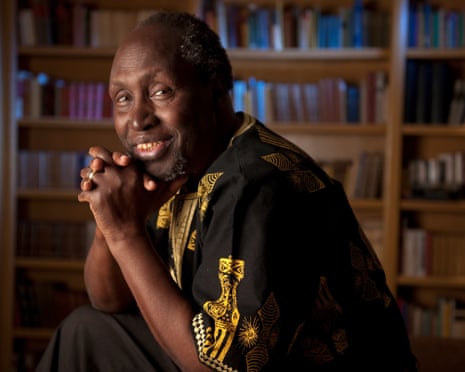

Few writers have reshaped the global literary landscape as profoundly as Ngũgĩ wa Thiong’o. For decades, this Kenyan giant has challenged imperialist structures through his breathtaking novels and essays. Consequently, he remains a towering figure in post-colonial literature.
His brilliant storytelling captures the painful complexities of history. Furthermore, his fearless activism proves that literature can shake empires. Today, his voice continues to inspire generations of readers worldwide.
The Early Years of Ngũgĩ wa Thiong’o
See also: http://Novaline.com.ng
From Political Exile to Literary Icon: The Real Story of Isabel Allende
Born in 1938 in Kamiriithu, Kenya, he grew up under colonial rule. This harsh environment deeply shaped his worldview. Because of this, his early memories revolved around the violent struggle for Kenyan independence.
Later, he attended the prestigious Makerere University in Uganda. During this vibrant era, his creative genius truly began to flourish. For instance, he wrote his debut novel, Weep Not, Child, while studying there.
A Rising Literary Star
This early success quickly established him as a premier voice in African fiction. He wrote his first major books in English. However, he soon felt restricted by the colonial tongue.
Why Ngũgĩ wa Thiong’o Chose Gĩkũyũ
In 1977, the author made a radical, defining career choice. He completely abandoned English for his native tongue, Gĩkũyũ. Crucially, he believed that true decolonization required reclaiming indigenous languages.
He then wrote a controversial play in Gĩkũyũ. Because of this bold move, the Kenyan government imprisoned him without a trial. Yet, detention could not silence his fierce creativity.
Writing on Prison Toilet Paper
While behind bars, he secretly wrote a whole novel on prison toilet paper. This legendary act of defiance produced Caitaani mũtharaba-inĩ (Devil on the Cross). Naturally, this triumph solidified his status as a cultural hero.
The Exile and Legacy of Ngũgĩ wa Thiong’o
Following his release, political persecution forced him into a long exile. Despite this painful displacement, his global influence grew rapidly. He taught at elite American universities for many decades.
Through his landmark essay collection, Decolonizing the Mind, he permanently altered academic discourse. Furthermore, he inspired countless global writers to embrace their own heritage.
An Enduring Global Influence
His vast body of work has earned him frequent Nobel Prize nominations. Today, scholars everywhere celebrate his profound impact on world literature. Therefore, his academic and creative triumphs remain entirely unmatched.
Conclusion
Ultimately, the life of Ngũgĩ wa Thiong’o represents an epic triumph of art over tyranny. He gave up prestige in the English language to honor his roots. By doing this, he changed the literary world forever. His magnificent books ensure that the soul of African storytelling will burn brightly for generations to come.