
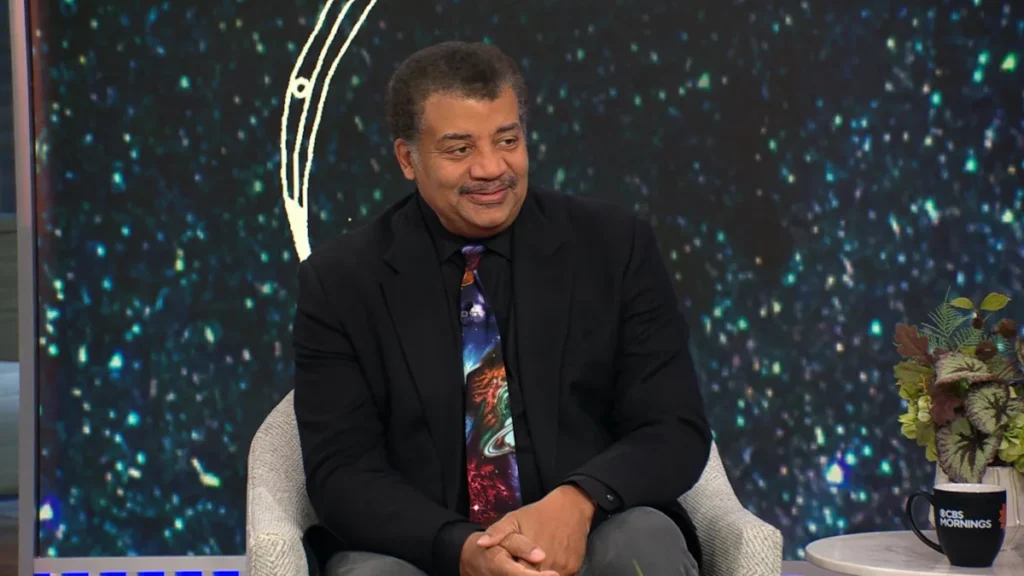

Growing up in New York City, Neil deGrasse Tyson was an endlessly curious kid. He lived in the Bronx with his supportive family.
At age nine, a single visit to the Hayden Planetarium changed everything. He looked up at the simulated night sky. Consequently, he became instantly hooked on the cosmos. The universe felt like a giant mystery waiting for answers.
Later, he attended the famous Bronx High School of Science. He spent his teenage nights on building rooftops, gazing at stars through his telescope. Furthermore, he even gave astronomy lectures to adults at just fifteen years old. His deep passion for space was already unstoppable.
Academic Journey of Neil deGrasse Tyson
See also: http://Novaline.com.ng
Yoshua Bengio: The Visionary Shaping the Soul and Future of Modern AI
After high school, he earned a physics degree at Harvard University. Next, he pursued a master’s degree at the University of Texas at Austin. Finally, he completed his doctorate in astrophysics at Columbia University.
However, his life was not limited to textbooks and academic papers. He maintained a dynamic active lifestyle throughout his university years. For instance, he spent years wrestling competitively. Moreover, he excelled as an enthusiastic Latin ballroom dancer.
These colorful experiences proved that scientists could be vibrant and dynamic people. In fact, he blended athletic energy with sharp intellect everywhere he went.
Leading the Hayden Planetarium
In 1996, his life came full circle in a remarkable way. He became the director of the Hayden Planetarium in New York. Thus, he was leading the very institution that sparked his childhood dreams.
Soon after, he landed right in the middle of a massive global debate. He chose to remove Pluto from the planet display. As a result, thousands of angry children sent him fiery letters.
Nevertheless, he handled the intense backlash with humor, kindness, and clear scientific facts. Eventually, official scientific organizations agreed with his vision.
Public Impact of Neil deGrasse Tyson
He quickly became a household name across the entire globe. He hosted Cosmos: A Spacetime Odyssey, carrying on Carl Sagan’s great legacy. In addition, he launched StarTalk, a popular podcast blending pop culture, humor, and science.
He also wrote many bestselling books over the years. His famous book, Astrophysics for People in a Hurry, made complex ideas simple. Therefore, millions of casual readers finally understood the cosmos.
His main goal has always remained consistent and clear. Specifically, he wants to make deep science accessible, exciting, and fun for everyone.
The Lasting Legacy of Neil deGrasse Tyson
Today, his impact extends far beyond standard classrooms and dry research labs. He turned hard science into an engaging topic for mainstream pop culture. Moreover, he inspired millions of kids to look up at the stars.
Ultimately, his work reminds us that curiosity belongs to all humanity. Science is not just an academic discipline. Instead, it is a glorious way of seeing our shared world. His infectious passion keeps our collective imagination alive today.