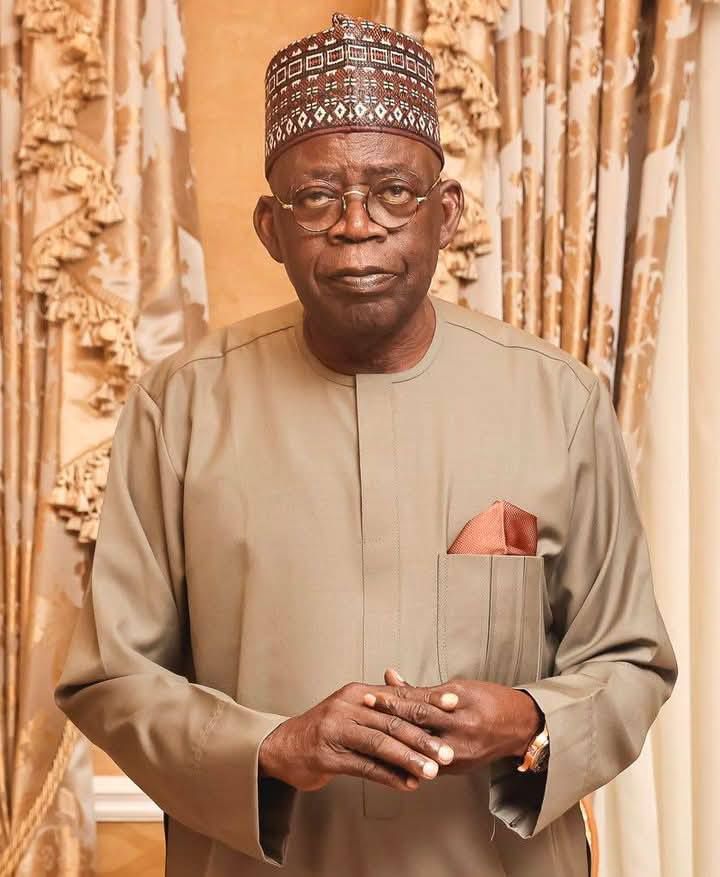

When Bola Ahmed Tinubu took the oath of office as President of Nigeria on May 29, 2023, he inherited a nation grappling with persistent inflation, currency pressures, and complex security dynamics. His ascent to the presidency followed three decades of strategic political networking, financial administration, and persistent opposition building. Known across Nigerian political circles as a master strategist, his career illustrates how fiscal reforms and party engineering reshaped West Africa’s largest economy.
The Early Life, Family Background, and Education of Bola Ahmed Tinubu
See also: http://Novaline.com.ng
The Definitive Life Story of Prabowo Subianto: From Special Forces General to President
Born on March 29, 1952, into the prominent merchant family of Abibatu Mogaji—who later became the Iyaloja (head of market women) of Lagos—Tinubu grew up grounded in commerce and public life. He completed his initial schooling in southwestern Nigeria before pursuing higher education in North America during the mid-1970s.
In the United States, he enrolled first at Richard J. Daley College in Chicago. Afterward, he transferred to Chicago State University, where he graduated with a Bachelor of Science in Accounting in 1979. His academic performance earned him places on the dean’s list and built the technical foundation for his subsequent career in corporate finance.
His Corporate Accounting and Career Beginnings
Before returning to Nigeria, Tinubu accumulated financial auditing experience across several prominent American firms. He worked as an accountant for Arthur Andersen, Deloitte, Haskins & Sells, and GTE Services Corporation. These roles gave him hands-on exposure to global financial compliance and corporate structures.
The Corporate and Political Timeline of Bola Ahmed Tinubu
- 1979: Graduated from Chicago State University (B.Sc.)
- 1983: Joined Mobil Oil Nigeria as Senior Auditor
- 1992: Elected Senator for Lagos West (SDP)
- 1994: Joined NADECO; Went into political exile
- 1999: Elected Governor of Lagos State
- 2013: Co-founded All Progressives Congress (APC)
- 2023: Sworn in as 16th President of Nigeria
Upon returning to Nigeria in the 1980s, he joined Mobil Oil Nigeria as a senior auditor. Over time, he rose through the administrative ranks to become the company’s chief accountant and treasurer. This corporate grounding heavily shaped his later managerial style in public service.
The Political Rise: Senate and the Pro-Democracy Struggle
Tinubu transitioned into public politics in 1992 by winning the Lagos West senatorial seat under the Social Democratic Party (SDP) banner. His tenure in the Third Republic proved short-lived when General Sani Abacha dissolved democratic structures in late 1993 following the annulment of the June 12 presidential election.
Pro-Democracy Coalition (1994)
- National Democratic Coalition: Organized domestic resistance and fought the military junta.
- Exile & Global Pressure: Rallied international diplomatic support.
Refusing to accept military rule, Tinubu helped found the National Democratic Coalition (NADECO). The coalition campaigned vigorously for the restoration of democracy and the recognition of Moshood Abiola’s election victory. Due to military harassment, he fled Nigeria in 1994, operating from exile in North America and Europe to rally international opposition against the junta. He returned in 1998 following Abacha’s death.
The Transformative Governance: Governor of Lagos State (1999–2007)
With Nigeria’s return to civilian governance in 1999, Tinubu won the Lagos State gubernatorial election on the Alliance for Democracy (AD) platform. Taking charge of a sprawling metropolis facing infrastructural neglect, his administration prioritized tax reform, institutional restructuring, and urban renewal.
His Lagos State Reforms (1999–2007)
- Internally Generated Revenue: Increased from ~₦600M to ~₦7B+ monthly
- LASTMA & Transport Reforms: Organized urban transit and traffic control.
- Judicial & Tax Systems: Restructured tax collection and expanded courts.
He established agency frameworks such as the Lagos State Traffic Management Authority (LASTMA) and modernized internal revenue collection systems. When President Olusegun Obasanjo’s federal administration withheld local government allocations over Lagos State’s creation of Local Council Development Areas (LCDAs), Tinubu relied on internal revenue generation strategies to keep state services running. By the end of his second term in 2007, Lagos had established a blueprint for municipal revenue growth that subsequent governors continued.
The National Party Building and the Formation of the APC
After stepping down as governor, Bola Ahmed Tinubu shifted his focus to national politics. Recognizing that fragmented regional opposition parties could not defeat the ruling People’s Democratic Party (PDP), he began building coalitions across geopolitical zones.
He expanded the Action Congress (AC), which later became the Action Congress of Nigeria (ACN). In 2013, Tinubu merged the ACN with key opposition blocs—including the Congress for Progressive Change (CPC) led by Muhammadu Buhari and the All Nigeria Peoples Party (ANPP)—to form the All Progressives Congress (APC). This merger delivered a historic opposition victory in the 2015 general elections, marking Nigeria’s first peaceful transfer of presidential power to an opposition party.
Presidency and Macroeconomic Reforms
Tinubu won the 2023 presidential election after securing majority votes across diverse regional bases. Upon taking office, his administration immediately launched bold fiscal and structural changes.
His Key Economic Policy Shifts:
- Fuel Subsidy Removal: Reallocated budget resources
- Currency Unification: Floating exchange rate
- Single Window System: Streamlined trade processing
- Tax Policy Streamlining: Targeted broad revenue growth
He ended the longstanding petrol subsidy regime and unified Nigeria’s multiple exchange rate windows to curb arbitrage and attract foreign direct investment. These reforms produced short-term price adjustments and inflationary pressures, prompting social safety net measures, tax rationalization bills, and infrastructure budget extensions. To further streamline maritime and international trade operations, his government pushed for full implementation of the National Single Window system.
His Leadership Style, Challenges, and Controversies
Observers describe Tinubu’s leadership style as pragmatic, transactional, and decentralized. Throughout his public career, he built a reputation for identifying administrative talents and placing them in key executive positions.
Public Scrutiny and Debates of political Journey of Bola Ahmed Tinubu
- Documentary and Identity Questions: Critics periodically raised questions regarding academic credentials and early background documentation during political campaigns.
- 1990s US Asset Forfeiture: Opponents frequently cited a 1993 Chicago court compromise involving asset forfeitures linked to bank accounts under his name.
- Revenue Models & Influence: Analysts often debated the extent of his political influence over Lagos State’s business environment and tax collection contracts post-2007.
Despite persistent political opposition, he consistently resolved disputes through judicial mechanisms and coalition negotiations.
His Personal Life
Tinubu is married to Oluremi Tinubu, a former three-term Senator representing Lagos Central and current First Lady of Nigeria. He holds traditional chieftaincy titles, including the Asiwaju of Lagos and the Jagaban of the Borgu Kingdom.
Frequently Asked Questions About Bola Ahmed Tinubu
What degree did Bola Ahmed Tinubu earn in the United States?
He earned his B.S.C in Accounting from Chicago State University in 1979.
When was Bola Ahmed Tinubu Governor of Lagos State?
He served two consecutive terms as Governor of Lagos State from May 1999 to May 2007.
What was NADECO and what role did Tinubu play?
NADECO (National Democratic Coalition) was a pro-democracy movement formed in 1994 to oppose military rule. Tinubu was a founding member and active financier who campaigned for democratic restoration from exile.
How did the All Progressives Congress (APC) form?
The APC formed in 2013 through a strategic merger of major opposition parties, including the ACN, CPC, ANPP, and a faction of the APGA, spearheaded by Tinubu and other political leaders.