
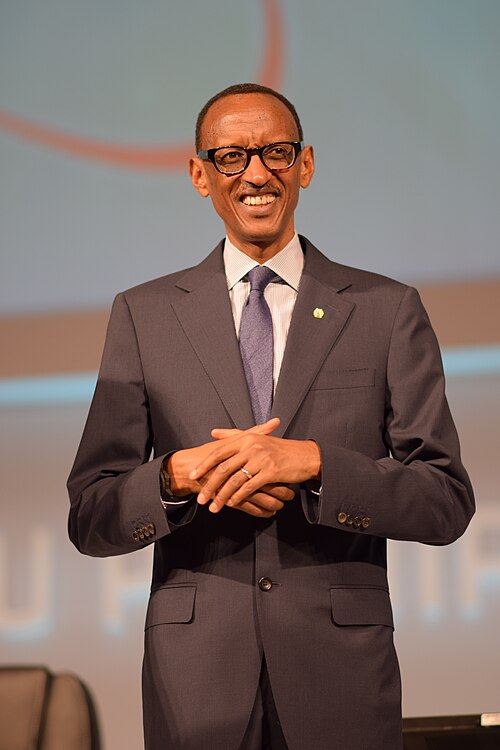

A boy fleeing across the Uganda border in 1962 rarely grows up to run the country he escaped. Paul Kagame did exactly that. He returned to Rwanda three decades later at the head of a rebel army, stopped a genocide, and has ruled the country ever since. Few African leaders inspire such fierce, split-screen judgment. Supporters see a nation-builder who turned rubble into a regional tech hub. Critics see a strongman who never quite let go of the reins he grabbed in 1994. This is the story of both men, because they are the same person.
Early Life & Displacement: Paul Kagame and a Childhood Built on Exile
See also: http://Novaline.com.ng
Shaping the Digital Frontier: The Remarkable Journey of James Manyika
Kagame was born in October 1957 near Gitarama, in what was then Rwanda’s central highlands. His family belonged to the Tutsi minority, and violence against Tutsis had already begun flaring by the time he was a toddler. In 1959 and again in 1962, waves of ethnic killing pushed his family out. Consequently, young Kagame grew up not in Rwanda but in refugee camps in Uganda.
That upbringing mattered more than geography suggests. Displacement taught him early that statelessness carries no dignity. Meanwhile, Uganda offered something Rwanda had denied his family: a path into organized political and military life. As a young man, Kagame joined Yoweri Museveni’s National Resistance Army, fighting in the Ugandan bush war of the early 1980s.
He rose fast. By the time Museveni took power in Kampala in 1986, Kagame held a senior post in Uganda’s military intelligence. However, his eyes stayed fixed on the country he’d never really known. In 1990, he helped found the Rwandan Patriotic Front. This is a rebel movement built largely from exiled Tutsis determined to return home, by force if necessary.
Training the Mind of a Strategist
Kagame later studied at the US Army Command and General Staff College in Kansas. There he sharpened a strategic style that colleagues describe as patient and unsentimental. That discipline would define everything that followed. Still, nothing prepared observers for what happened next in Rwanda itself.
RPF Leadership & 1994: How Paul Kagame Ended a Genocide
The RPF’s founding leader, Fred Rwigyema, died in the opening days of the group’s 1990 invasion. Kagame took command almost immediately. For four years, his forces fought a grinding civil war against the Hutu-led government, pausing only for a fragile 1993 peace accord. That peace collapsed on April 6, 1994, when a plane carrying President Juvénal Habyarimana was shot down. Extremist militias began slaughtering Tutsis and moderate Hutus within hours. Roughly 800,000 people died over the next hundred days—one of the fastest mass killings in modern history.
Kagame’s RPF resumed its offensive immediately, driving toward Kigali as the killing spread. His forces captured the capital in July 1994, ending the genocide but not the region’s agony. Millions of Hutus, some guilty of atrocities and many simply afraid, fled into neighboring Zaire, now the Democratic Republic of Congo. That exodus planted seeds of conflict that still haven’t fully died. Kagame became vice president and defense minister in the new government, though few doubted who actually held power. He formalized that position in 2000, becoming president outright.
The Economic Transformation: From Rubble to Regional Model
Rwanda in 1994 had almost nothing left standing—institutions, infrastructure, or trust between neighbors. What followed over the next three decades surprised even skeptics. Between 2012 and 2022 alone, GDP grew at an average of 7.2 percent annually, among the fastest rates on the continent. Kagame pushed hard on cleanliness and order as governance philosophy, not just aesthetics. Kigali became known as one of Africa’s tidiest, safest capitals, a deliberate branding exercise as much as a public health measure. Plastic bags are banned. Streets get swept monthly during mandatory community cleanup mornings. Technology became the centerpiece of his economic pitch. Rwanda built fiber-optic networks ahead of far wealthier neighbors and marketed itself aggressively as a startup-friendly, low-corruption gateway to East Africa. International conferences, from Africa CEO Forum sessions to global tech summits, increasingly chose Kigali as host.
The Numbers Behind the Narrative
Even so, prosperity hasn’t reached everyone equally. The World Bank estimates nearly half of Rwandans still live on less than $2.15 a day. As a result, critics argue the growth story works better as a marketing tool for donors than as lived reality for rural farmers. Kagame’s government counters that poverty reduction takes generations, not years, and that the trajectory still beats regional peers. Foreign aid has fueled much of this progress, arriving steadily despite recurring controversies over Rwanda’s regional conduct. Donors have repeatedly weighed accountability against stability, usually choosing stability.
Governance & Global Perception: Is Paul Kagame Visionary or Autocrat?
Here lies the central tension of Kagame’s legacy. Rwanda holds elections, yet outcomes never stay in doubt. He won the 2024 presidential vote with 99.18 percent, an even wider margin than his 98.79 percent showing in 2017. Only two token challengers were permitted to run; serious opposition figures were barred outright.
Human rights organizations have documented a long pattern of disappeared critics, exiled dissidents, and journalists facing intimidation. Kagame’s supporters counter that Rwanda’s ethnic wounds are too raw for Western-style multiparty chaos, and that stability required firm central control. Both explanations get repeated so often they’ve become dueling scripts, performed for different audiences. A 2015 referendum lifted term limits entirely, opening a path for Kagame to remain president until 2034 if he chooses. Nine million voters registered for the 2024 election, and turnout topped 98 percent, numbers that read as either genuine enthusiasm or evidence of a system with no real alternative, depending on who’s counting.
Foreign Policy Dilemmas: The Congo Question and Paul Kagame
Nowhere has scrutiny intensified more than over eastern Congo. Rwanda has long backed the M23 rebel group there, according to UN experts and Western governments, even as Kigali insists its troop presence amounts to defensive measures against hostile militias. In early 2025, M23 forces seized Goma, a major regional hub, in an offensive UN estimates say killed up to 900 people. Diplomacy has moved in fits and starts since then. Kagame and Congolese President Félix Tshisekedi signed the Washington Accords in December 2025, brokered under US pressure, aiming to end the fighting. Congo accused Rwanda of violating that very agreement within days, alleging fresh attacks in South Kivu. By March 2026, the United States had sanctioned Rwandan military officers directly over continued support for M23, even as separate Doha-mediated talks inched toward a ceasefire framework.
Kagame, for his part, has pushed back forcefully on outside pressure. Speaking to RPF party delegates in Kigali in mid-2026, he argued Rwanda neither started the conflict nor bears responsibility for ending it. That framing rarely satisfies Washington, Brussels, or Kinshasa, yet it plays well domestically, where Kagame’s security narrative still commands broad public trust.
A Legacy Still Being Written
Three decades after riding into Kigali at the head of a rebel column, Kagame remains the only leader most Rwandans have ever known. Nearly two-thirds of the population is under 30, meaning most citizens have no personal memory of the chaos he claims to have ended. For them, his rule is simply how Rwanda works. Whether history remembers him primarily as reconstructionist or autocrat likely depends on what happens next—inside Rwanda’s borders and beyond them. Meanwhile, the man himself shows no visible interest in stepping back to let others answer that question for him.


