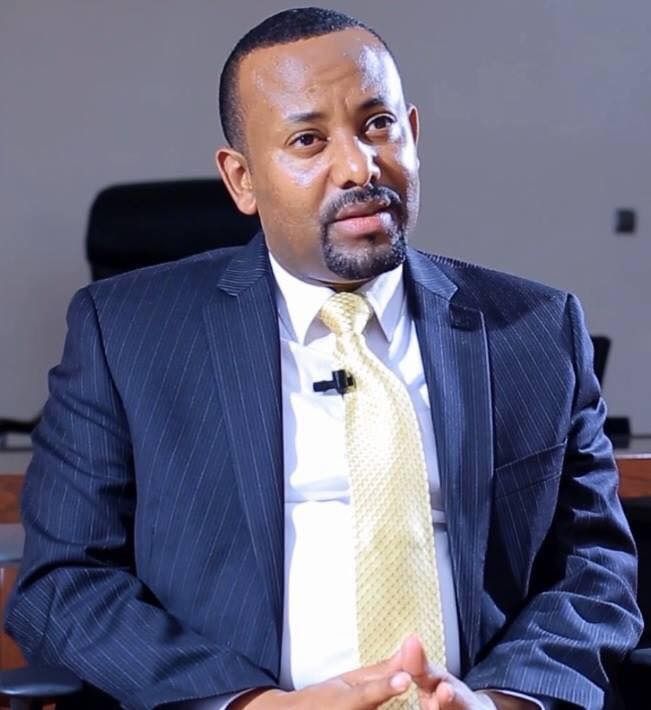

Fourteen years old, and already carrying a rifle. That was Abiy Ahmed in 1991, a boy from a small farming town in southwestern Ethiopia, joining a rebel column marching against the Derg regime. Nobody in Beshasha could have guessed where that decision would lead. Within three decades, this same boy would sign a peace deal with Eritrea, collect a Nobel Peace Prize in Oslo, and then send troops into his own northern region as civil war tore the country apart. Few modern leaders carry a story with this many turns. Abiy Ahmed’s life reads less like a straight political rise and more like a series of sharp pivots, each one reshaping how the world sees him.
Who Is Abiy Ahmed? A Childhood Split Between Two Faiths
See also: http://Novaline.com.ng
Abiy Ahmed Ali was born on August 15, 1976, in Beshasha, a farming town in what is now Ethiopia’s Oromia region. His father, Ahmed Ali, was a Muslim Oromo farmer with thirteen children by four wives. His mother, Tezeta Wolde, practiced Christianity and raised six children of her own. He was her youngest child, and his birth name was Abiyot — Amharic for “Revolution.” Growing up between two religions shaped him early. So did growing up in a country at war with itself. Beshasha had no shortage of khat and coffee farms, but modern infrastructure remained scarce well into his childhood. His schooling started locally, first in Beshasha, then in the nearby town of Agaro. He loved books, according to those who knew him then, and he pushed classmates to take their studies seriously, too.
The Journey of Abiy Ahmed From Child Soldier to Lieutenant Colonel
At 14, following his older brother’s death, Abiy joined the armed resistance against Mengistu Haile Mariam’s Marxist government. He fought as part of forces aligned with the Oromo People’s Democratic Organization, one faction in the coalition that eventually toppled the Derg in 1991. He didn’t leave the military once the fighting stopped. Instead, he built a career inside it, eventually reaching the rank of Lieutenant Colonel in the Ethiopian National Defense Force. Between 1995 and 1997, he served as a United Nations peacekeeper in Rwanda, a posting that placed him inside one of the most difficult peacekeeping missions of the decade.
He returned home in 1998 and went back to school, earning a bachelor’s degree in computer engineering in 2001. That technical background mattered more than it might seem, because in 2007, the government put him in charge of the newly formed Information Network Security Agency, Ethiopia’s cybersecurity and intelligence body.
The Rise of Abiy Ahmed Through Ethiopian Politics
By 2010, Abiy had moved from soldier and spy chief to elected official, winning a parliamentary seat representing his home district. He climbed steadily through the ranks of the Oromo People’s Democratic Organization over the following years, building relationships across a governing coalition that was starting to crack under its own weight. That coalition, the Ethiopian People’s Revolutionary Democratic Front, had ruled Ethiopia for nearly three decades. However, by 2018, years of protests against ethnic marginalization and heavy-handed crackdowns had worn the ruling front down. Prime Minister Hailemariam Desalegn resigned under pressure, leaving a vacuum at the top.
Abiy Ahmed filled it. On April 2, 2018, Ethiopia’s House of Peoples’ Representatives elected him prime minister at age 41, making him the youngest leader in the country’s modern history.
The First Hundred Days That Changed Everything
He moved fast. Within months, Abiy released thousands of political prisoners, lifted media restrictions, and welcomed exiled opposition figures back into the country. State-run enterprises opened to private investment for the first time in years. Then came the move that defined his first year in office. On July 9, 2018, Abiy and Eritrean President Isaias Afwerki declared an end to the state of war that had frozen relations between their countries since 1998. Flights resumed. Families separated for two decades reunited at reopened borders. The world took notice. In 2019, the Nobel Committee awarded Abiy Ahmed the Nobel Peace Prize for his diplomacy with Eritrea and his broader push toward regional cooperation. At 43, he became one of the youngest Nobel Peace laureates in the prize’s history.
The Prosperity Party and a Fractured Federation
Abiy didn’t stop at foreign policy. In 2019, he dissolved the old EPRDF coalition entirely and replaced it with a single unified party, the Prosperity Party. Supporters called it a bold step toward national unity, since it merged ethnically based regional parties into one structure.
Critics saw something else. To groups like the Tigray People’s Liberation Front, which had dominated Ethiopian politics for years under the old coalition, the move looked like a direct threat to their power base. As a result, tensions between Addis Ababa and the Tigray region deepened fast. Elections scheduled for 2020 were postponed, officially because of the coronavirus pandemic. Tigray’s regional government rejected the delay and held its own vote anyway, defying the federal government outright.
War Breaks Out in Tigray
By November 2020, the standoff had turned violent. Fighting erupted between federal forces and Tigrayan regional forces, with both sides accusing the other of striking first. Abiy declared a swift military victory within weeks. The war didn’t end there. Fighting dragged on for two more years, spreading into neighboring regions and pulling in Eritrean troops on the federal side. Human rights investigators later documented atrocities on multiple sides, including sexual violence used as a weapon of war. Millions of people were displaced. Famine conditions returned to parts of northern Ethiopia for the first time in years, undoing much of the progress the country had made since the 1980s. A peace agreement signed in Pretoria in November 2022 formally ended the fighting, though the region’s political status remained deeply unsettled.
Ethiopia in 2026: Growth, Division, and a Third Term
Ethiopia’s economy has kept growing through the turbulence. Officials project growth above 10 percent for 2026, among the fastest rates anywhere in Africa. Nearly half the country’s 135 million people are under 18, giving Abiy’s government a young population it insists it can lift into prosperity.
Political division tells a different story. When Ethiopians voted in general elections on June 1, 2026, polling didn’t happen in Tigray at all, since election officials cited ongoing instability there. Meanwhile, rebellions tied to ethnic grievances continued simmering in two of the country’s largest regions. The Prosperity Party still won comfortably. Analysts noted that the party deliberately skipped fielding candidates in dozens of constituencies, apparently to let opposition figures win seats and give the parliament a veneer of pluralism. Whether that strategy signals genuine reform or careful stage management remains an open question among Ethiopia watchers.
Diplomacy Continues Despite Domestic Strain
Abiy hasn’t retreated from the world stage. French President Emmanuel Macron visited Addis Ababa in May 2026, and Abiy appeared days later at the Africa Forward Summit in Nairobi, positioning Ethiopia as a continental economic leader even as questions about internal stability persist. That contrast — a Nobel Peace Prize winner presiding over unresolved regional conflict — remains the central puzzle of his leadership. Supporters point to infrastructure gains, urban development projects in Addis Ababa, and steady GDP growth as proof his reforms are working. Detractors argue the numbers mask deep fractures that a landslide election victory can’t paper over.
Faith, Family, and Life Outside Politics
Abiy is a devout Evangelical Pentecostal Christian, a detail that shapes both his public rhetoric and his private routine. He’s also known for a disciplined fitness regimen, often citing the link between physical and mental health. He married Zinash Tayachew, whom he met while both served in the Ethiopian National Defense Force. The couple has three daughters together and has also adopted a son.
Why the Story of Abiy Ahmed Still Matters
Few African leaders have swung this dramatically between global acclaim and domestic controversy within a single decade. Abiy Ahmed ended a twenty-year standoff with Eritrea, then presided over one of the deadliest conflicts on the continent in recent memory. Meanwhile, Ethiopia’s economy keeps expanding even as ethnic tensions remain unresolved in several regions. That tension, between growth and grievance, will likely define how history ultimately judges him. For now, Abiy Ahmed leads a nation of contradictions. So does his legacy.
Key Milestones in the Life of Abiy Ahmed
- 1976: Born in Beshasha, Oromia region, to a Muslim father and Christian mother.
- 1991: Joins the armed struggle against the Derg regime at age 14
- 1995–1997: Serves as a UN peacekeeper in Rwanda.
- 2007: Appointed head of Ethiopia’s Information Network Security Agency.
- 2010: Elected to Ethiopia’s House of Peoples’ Representatives.
- April 2018: Sworn in as Prime Minister of Ethiopia.
- July 2018: Signs peace declaration ending the Ethiopia-Eritrea border war.
- 2019: Awarded the Nobel Peace Prize; founds the Prosperity Party.
- November 2020: Federal war breaks out in the Tigray region.
- November 2022: Pretoria peace agreement formally ends the Tigray conflict.
- June 2026: Wins another parliamentary majority amid continued regional unrest.