
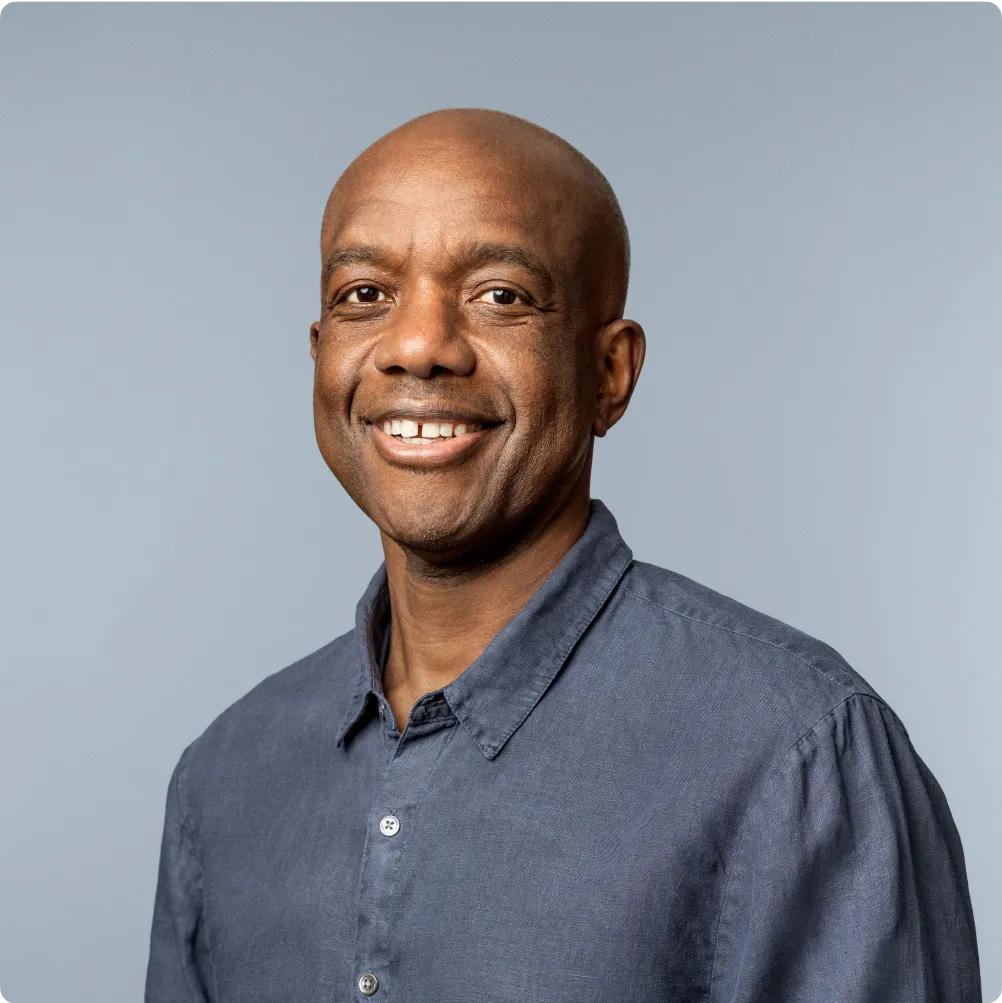

Inside the high-stakes world of modern artificial intelligence, few leaders cross the line between engineering and human economics quite like James Manyika. He sits at the quiet center of global technology policy, transforming complex mathematical systems into clear frameworks for real-world governance. When major tech platforms face tough choices around AI ethics, economic disruption, and technological change, Manyika often helps frame the path forward. His career spans prestigious academic research labs, executive boardrooms, and international diplomatic chambers. Yet, his guiding principle remains straightforward: technology must ultimately serve humanity rather than displace it.
Early Life & Oxford Roots of James Manyika
See also: http://Novaline.com.ng
The Arbitrage of Power: How Tidjane Thiam Navigated Wall Street, Zurich, and Ivorian Politics
Long before guiding global strategy for major technology firms, James Manyika grew up in Zimbabwe, driven by a deep curiosity about physical systems and mathematics. He attended Prince Edward School in Harare before pursuing a First Class Bachelor of Science degree in Electrical Engineering at the University of Zimbabwe. His academic excellence caught the attention of global scholarship panels, earning him a prestigious Rhodes Scholarship to the University of Oxford. At Oxford, Manyika immersed himself in artificial intelligence, mathematics, and advanced computer science. He earned his Master of Science, Master of Arts, and Doctor of Philosophy (DPhil) in AI and Robotics. His doctoral work focused heavily on decentralized data fusion, Bayesian networks, and multi-agent systems—foundational concepts that power modern autonomous networks today.
Academic Path & Milestones of James Manyika:
-
- University of Zimbabwe: Earned a First Class B.Sc. in Electrical Engineering.
- University of Oxford: Awarded Rhodes Scholarship; completed M.Sc., M.A., and DPhil degrees.
- Balliol College & Faculty: Served as a Robotics & AI Research Fellow and engineering faculty member.
Beyond his degrees, Oxford became a long-term academic home. Elected a Research Fellow at Balliol College, Manyika served on the engineering faculty, publishing influential papers alongside top computer scientists. He also expanded his research horizons outward, spending time as a visiting scientist at NASA’s Jet Propulsion Laboratory and working as a faculty exchange fellow at MIT.
The McKinsey Era: Mapping Global Economics
Academic breakthroughs offered deep satisfaction, but Manyika wanted to see how technological change affected global business models and national economies. In 1997, he made a major career pivot by joining McKinsey & Company. Based out of Silicon Valley for over two decades, he quickly established himself as an essential advisor to founders, CEOs, and global boards.
McKinsey Leadership Highlights:
-
- Served as Chairman and Director Emeritus of the McKinsey Global Institute (MGI).
- Acted as a Senior Partner and member of McKinsey’s Shareholders Council.
- Pioneered authoritative empirical research on labor markets, productivity, and automation.
- Mapped digital economic transformations and their impact on global trade and employment.
Manyika eventually stepped into the role of Chairman and Director of the McKinsey Global Institute (MGI). Under his leadership, MGI produced groundbreaking research analyzing the future of work, global productivity trends, labor automation, and digital market transformation. Furthermore, his team provided empirical data that shifted public debates away from panic over lost jobs toward thoughtful strategies for retraining workers and adjusting labor markets.
Strategic Shift to Google: Leading Technology and Society
After twenty-five years at McKinsey, Manyika took on an expanded role inside the technology sector itself. In late 2021, Alphabet and Google created a brand-new executive position tailored specifically to his unique skill set: Senior Vice President of Technology and Society. Reporting directly to Sundar Pichai, Manyika took responsibility for guiding how Google’s most ambitious advancements interact with society, law, and human culture.
Google Leadership Structure of James Manyika:
-
- Executive Leadership: Reports directly to Sundar Pichai (CEO, Alphabet & Google).
- Executive Role: Senior Vice President of Research, Technology, and Society.
- Core Portfolios:
- Google Research: Overseeing advanced scientific and foundational computing initiatives.
- Google Labs: Guiding experimental product developments and early prototype deployments.
- Technology & Society: Alignment of social, economic, policy, and ethical frameworks across Google’s roadmap.
His portfolio expanded to oversee Google Research and Google Labs, placing him at the center of the company’s AI breakthroughs, scientific computing, and experimental applications. In this role, James Manyika ensures that advanced research teams work alongside public policy experts, ethicists, and economic researchers. This integrated structure helps ensure cutting-edge generative tools and machine learning applications land safely in public hands.
Policy, Ethics, and Global Governance
Manyika’s influence reaches well beyond executive suites and engineering labs. Over several presidential administrations, the United States government has drawn regularly on his expertise. President Barack Obama appointed him Vice Chair of the President’s Global Development Council at the White House. Additionally, US Commerce Secretaries named him to both the Digital Economy Board and the National Innovation Board.
Global Public Service & Advisory Roles:
-
- Co-Chair, United Nations Secretary-General’s High-Level Advisory Body on AI.
- Vice Chair, United States National Artificial Intelligence Advisory Committee (NAIAC).
- Vice Chair, White House Global Development Council.
- Board Member, Council on Foreign Relations (CFR).
On the international stage, Manyika actively helps design guardrails for artificial intelligence. He serves as Vice Chair of the US National AI Advisory Committee (NAIAC) and was appointed Co-Chair of the United Nations Secretary-General’s AI Advisory Body. Through these diplomatic leadership roles, Manyika works directly with world leaders, civil society advocates, and technical experts to build global consensus on safe, equitable AI standards.
Thought Leadership Across Academic Boardrooms
Despite his heavy executive schedule, James Manyika maintains deep ties with leading academic and philanthropic organizations. He sits on the boards of major foundations, including the Hewlett Foundation and the MacArthur Foundation, helping guide funding toward economic opportunity and civil rights.
Academic Appointments & Governance Roles:
-
- Oxford University: Visiting Professor at the Blavatnik School of Government.
- Stanford University: Distinguished Fellow at the Institute for Human-Centered AI (HAI).
- Broad Institute: Board Member of the Broad Institute of MIT and Harvard.
- Academic Honors: Elected Fellow of the American Academy of Arts and Sciences.
As a Visiting Professor at Oxford’s Blavatnik School of Government and a Distinguished Fellow at Stanford’s Human-Centered AI Institute, Manyika continues to mentor students and researchers. His elected fellowships at the American Academy of Arts and Sciences and the Royal Society of Arts reflect a career dedicated to bridging the gaps between engineering, economics, and public policy.
Impact & Future Outlook: The Legacy of James Manyika
The career of James Manyika provides an instructive blueprint for managing fast-paced technological change. His work demonstrates that technological progress and societal well-being do not have to stand at odds. Instead, with rigorous research, open global policy discussions, and careful leadership, advanced technologies can drive widespread prosperity. As artificial intelligence continues to reshape global industries, labor markets, and educational systems, James Manyika stands out as a steady, thoughtful voice. His journey from a curious engineering student in Zimbabwe to an influential technology leader demonstrates the power of interdisciplinary thinking. By grounding complex algorithms in genuine human values, he helps build a future where technological breakthroughs serve everyone, everywhere.