
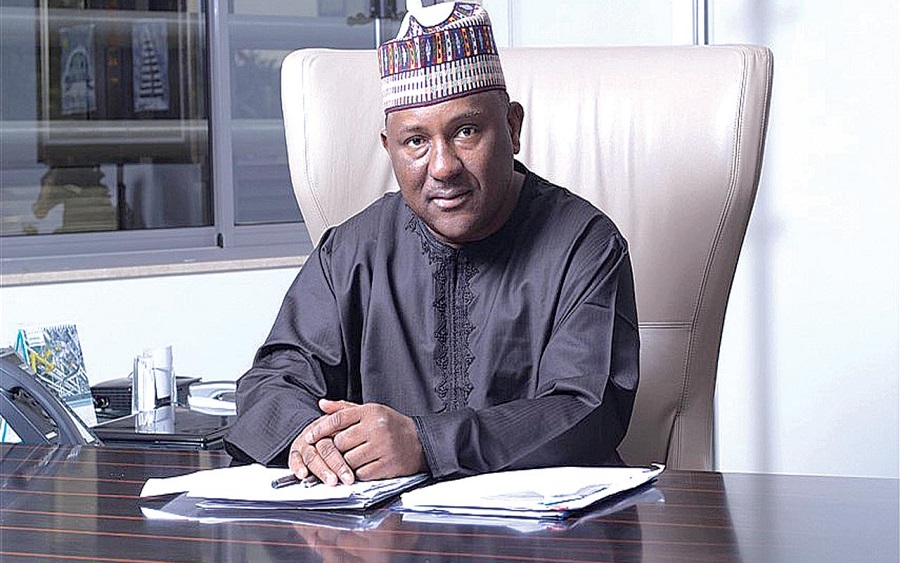

Picture a stack of import licenses for rice, iron, and edible oil, filed by a young trader in Lagos back in 1988 know as Abdul Samad Rabiu. That paperwork became BUA International Limited. Nobody in that office could have predicted the company would one day mint one of the richest men in Africa. Yet here we are. By May 2026, Abdul Samad Rabiu’s fortune had reportedly touched $18.6 billion, according to Bloomberg’s tracking index. That figure placed him just behind Aliko Dangote on the continental wealth ladder. However, the real story isn’t the number itself. It’s how a commodity trader from Kano built an industrial machine sturdy enough to survive naira devaluation, fuel subsidy chaos, and decades of Nigerian policy whiplash.
Who Is Abdul Samad Rabiu?
See also: http://Novaline.com.ng
Patrice Motsepe: The Lawyer Who Bought Six Broken Gold Mines and Built an Empire
Rabiu was born on August 4, 1960, in Kano, the commercial heart of northern Nigeria. His father, Khalifah Isyaku Rabiu, was already a towering industrialist by the 1970s. As a result, young Abdul Samad grew up watching business deals unfold at the dinner table, not in a classroom. He attended Federal Government College in Kano before heading to Capital University in Columbus, Ohio. His American education didn’t last as long as planned, though. His father was detained by the Buhari military administration over disputed rice import duties, and the family needed him back home. So he returned to Lagos to help steady the ship. That crisis, oddly enough, became his training ground.
Building BUA From Nothing But Trade
In 1988, Rabiu launched BUA International Limited with one narrow purpose: import rice, edible oil, flour, iron, and steel. Nothing glamorous. Just margins on containers moving through Nigerian ports. The real break came in 1990. The government-owned Delta Steel Company signed a raw materials supply deal with BUA, exchanging inputs for finished products. That single contract gave the young firm working capital most competitors couldn’t touch. BUA then pushed into producing steel billets, importing iron ore, and building rolling mills across Nigeria. Meanwhile, Rabiu wasn’t content staying in one lane. He watched consumer demand data closely, and he moved wherever gaps appeared.
From Trading House to Industrial Group
The company acquired Nigerian Oil Mills Limited, then the country’s largest edible oil processor. In 2005, BUA opened flour mills in both Lagos and Kano. By 2008, the group had cracked open an eight-year monopoly in Nigeria’s sugar industry, commissioning what became sub-Saharan Africa’s second-largest sugar refinery. Cement came next, and it would eventually define his legacy.
Abdul Samad Rabiu and the Cement Bet That Changed Everything
In 2009, BUA took a controlling stake in a publicly listed cement company in northern Nigeria. Construction soon began on a $900 million plant in Edo State, which finally opened in early 2015. Critically, Rabiu chose to build capacity rather than simply import finished cement, a decision that looked expensive at the time but paid off enormously later. Fast forward to 2026, and BUA Cement controls production capacity nearing 20 million tons annually. In January 2026, Rabiu met with China’s CBMI Construction Limited to discuss expanding manufacturing lines in northern Nigeria even further. Housing shortages across the country, plus government-backed infrastructure spending, have kept order books full. Group revenue reflects that momentum too. It climbed to 1.18 trillion naira in 2025, up from 876 billion naira the year before.
The 2026 Wealth Surge, Explained
Here’s where the numbers get genuinely dramatic. Abdul Samad Rabiu started 2026 ranked as Africa’s fifth-richest person, with a net worth near $10.4 billion. Within four months, he had climbed to second place, trailing only Dangote. What drove it? Two publicly traded companies, BUA Cement and BUA Foods, posted extraordinary results almost simultaneously. BUA Cement’s first-quarter 2026 profits jumped 117% year-on-year to N176.4 billion. BUA Foods, meanwhile, reported a 95% profit surge of its own. Consequently, Nigerian Exchange investors piled in, and share prices followed. There’s a structural reason the gains hit his personal fortune so directly, too. Rabiu holds roughly 98.2% of BUA Cement and about 95% of BUA Foods, according to Forbes estimates. That concentration means almost every naira of market appreciation flows straight to him, unlike diversified shareholders spreading gains across dozens of investors.
Why This Matters Beyond One Man’s Bank Balance
Rupert’s South African fortune, tied to luxury goods through Richemont, took a hit from rand volatility and soft Asian demand around the same period. Rabiu’s industrial holdings, anchored in cement and food, moved in the opposite direction. In fact, that contrast says something bigger about where African capital is finding its footing right now: essential infrastructure and food security, not luxury exports.
Philanthropy and Public Life
Rabiu channels his giving through the BUA Foundation. Notable projects include a 7,000-square-meter paediatric ward at Aminu Kano Teaching Hospital and a Centre for Islamic Studies at Bayero University Kano. He also chaired Nigeria’s Bank of Industry for a period, giving him direct influence over how the country finances manufacturing growth. In October 2022, President Muhammadu Buhari conferred on him the Order of the Federal Republic. He additionally holds Nigeria’s Order of the Niger and Niger Republic’s Grand Commander of the Order of Merit.
What Comes Next for Abdul Samad Rabiu
Refinery ambitions have proven trickier than cement or sugar ever were. Reports through early 2025 flagged delays getting a planned refinery fully operational, a reminder that even Nigeria’s sharpest industrialists hit friction in energy infrastructure. Still, betting against Rabiu at this stage would be premature. His pattern is consistent across four decades: spot where Nigeria imports something essential, build domestic capacity to replace it, and hold the equity tightly. Cement followed that script. Sugar followed it. Flour followed it. Whether refining eventually falls into line remains the open question for 2027 and beyond. One thing is already clear, though. Abdul Samad Rabiu didn’t inherit his way to $18 billion. He built it, plant by plant, starting with a trading license and a stack of import paperwork nobody thought twice about in 1988.


