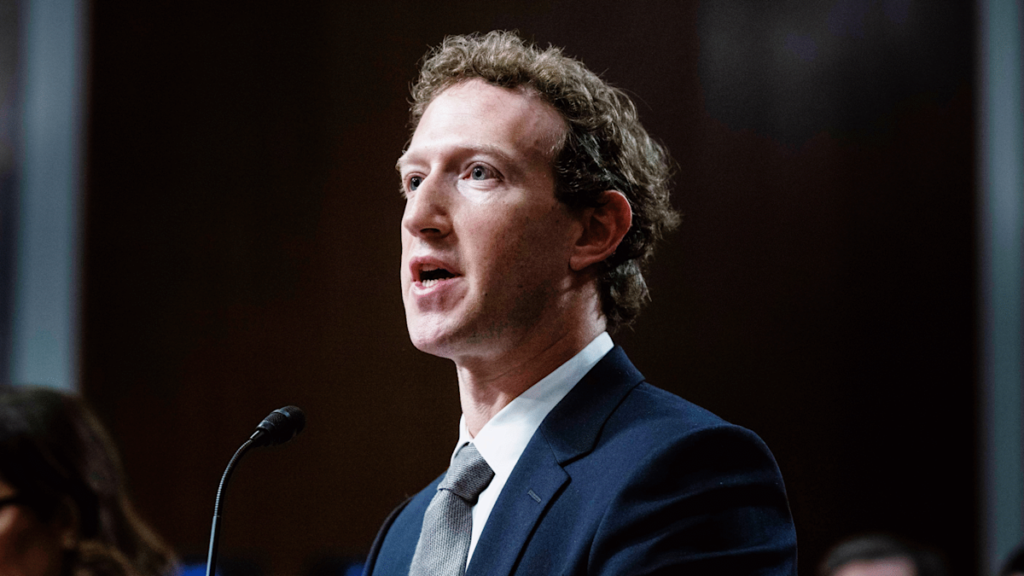

This isn’t a chronology of a coder’s lucky break. It’s the record of a strategist – Mark Zuckerberg who read human curiosity as a market inefficiency, and who has spent two decades buying, cloning, and rebuilding whatever stood between him and the next network.
The Hook in Mark Zuckerberg Biography
See also: http://Novaline.com.ng
Bill Gates Biography: The Man Who Turned Code Into a Tollbooth
Every empire needs a founding myth, and Silicon Valley gave Mark Zuckerberg the wrong one. The myth says a socially awkward sophomore built a website to meet girls, and the website got big. However, the truth is colder and more interesting. Zuckerberg didn’t stumble into a social network. Instead, he identified an immense market inefficiency before almost anyone else with capital behind him. He realized that human beings will spend unlimited hours looking at information about other human beings. Furthermore, he saw that this appetite could be metered, ranked, and sold.
This core insight serves as the spine of this Mark Zuckerberg biography. Consequently, it explains the fraternity-party dorm-room product that became Facebook founder history’s central chapter. It also explains why he paid a billion dollars for a photo app with thirteen employees, and nineteen billion more for a messaging tool with no revenue model. Similarly, it clarifies a massive $600 billion infrastructure bet on AI that he has never fully described in public. Ultimately, Zuckerberg is not a tech mascot. He is a market maker who found the one commodity—attention—that the rest of the internet was pricing wrong. Because of this, he has spent his entire adult life closing that gap in his own favor.
A Dentist’s Son Who Learned to Read Rome Before He Learned to Code People
Mark Elliot Zuckerberg was born on May 14, 1984, in White Plains, New York. He was raised in the nearby village of Dobbs Ferry, where his father ran a dental practice out of the family home. Meanwhile, his mother worked as a psychiatrist before raising four children. His father gave him his first programming lessons in Atari BASIC while he was still in grade school. By his early teens, Zuckerberg had built Zucknet. This was a rudimentary messaging system his father used to communicate between the house and his dental office. In hindsight, it was an early, almost comic preview of a career spent building tools that connect people who are technically already in the same building.
Exeter: Fencing, Latin, and a Refusal to Sell
At Phillips Exeter Academy, Zuckerberg captained the fencing team and graduated with a diploma in classics. He developed enough fluency in Latin and ancient Greek to read the source texts rather than the summaries. Crucially, this is not a decorative biographical detail. Fencing rewards a specific cognitive style. It requires reading an opponent’s intention a half-second before they commit to it, then closing the distance. Zuckerberg’s business career reads like an extension of the same instinct. He excels at watching a rival’s movement and closing before they finish the thought.
While at Exeter, he and a roommate built Synapse. This was an early machine-learning-driven music player that guessed what a listener wanted to hear next. Because of its success, AOL and Microsoft both tried to buy it and offered him a job straight out of high school. Surprisingly, he turned them down. The pattern that would define the next two decades was already visible. He would build something people don’t yet know they need, get an acquisition offer, say no, and go build the next thing on his own terms.
Harvard and the Discovery That People Are the Product
Zuckerberg arrived at Harvard in 2002 already carrying a reputation as a programming prodigy. He studied psychology alongside computer science. This specific pairing turned out to be the whole business plan. In his sophomore year, he built CourseMatch. This tool let students choose classes by watching what their peers had already chosen, successfully introducing social proof as a product feature.
Soon after, he created Facemash. This site pulled photos from the university’s residential facebooks and asked visitors to rank which student was more attractive. Harvard shut it down within days for violating student privacy and clogging the campus network. As a result, Zuckerberg was hauled before the Administrative Board.
Facemash was reckless and it embarrassed people, but it taught him a powerful lesson. No business school case study could match it. He discovered that an unmoderated ranking of other people’s faces will outcompete almost anything else on a college network for sheer, compulsive attention.
That lesson—dressed in a much more responsible interface—became TheFacebook. Zuckerberg launched it from his Kirkland House dorm room on February 4, 2004, alongside Eduardo Saverin, Dustin Moskovitz, Andrew McCollum, and Chris Hughes. Within two weeks, more than half of Harvard’s undergraduates had signed up. Therefore, he dropped out that June and moved the operation to a rented house in Palo Alto. By the end of 2004, the platform had crossed one million users. He has not, in any meaningful sense, stopped moving since.
Buying the Future Before the Market Could Price It
Arbitrage, in its purest form, means spotting the same asset priced two different ways in two different markets and pocketing the gap. Zuckerberg’s version is simple. First, he finds a network where attention is cheap because the founders haven’t built an ad engine. Then, he pairs it with Facebook’s targeting and monetization machinery. He does this before the seller, or a competing buyer, realizes what it’s actually worth. Remarkably, he has run this play at least twice at a scale that reshaped the entire industry.
Instagram: The Billion-Dollar Panic Buy
In April 2012, Twitter offered roughly $500 million for Instagram. At the time, it was a thirteen-person photo-sharing startup with no advertising business at all. Zuckerberg had internally described Instagram’s rise as genuinely alarming. Consequently, he moved before the ink dried on any rival term sheet. He invited founder Kevin Systrom to his home in Menlo Park, and the two shook hands on a billion-dollar deal.
This was double Twitter’s offer for a product with essentially zero revenue. Antitrust regulators later surfaced Zuckerberg’s own internal messages. These texts described Instagram and a rival app as networks that could become “very disruptive” to Facebook if left independent. Therefore, he wasn’t just buying users. He was buying a threat before it matured, then feeding it Facebook’s ad infrastructure until it became one of the most valuable media properties on Earth.
WhatsApp: Nineteen Billion Dollars for a Habit
Two years later, Zuckerberg repeated the play at a scale nobody expected. WhatsApp had over 450 million monthly users and near-total engagement. However, it had almost no monetization strategy. The company had built one of the world’s largest attention pools and left it almost entirely unpriced.
To fix this, Facebook paid roughly $19 billion in cash and stock. This total was later reported as high as $22 billion once earn-outs vested. Regulators would spend the next decade arguing that both deals were designed to eliminate competition. They claimed the goal was to crush any network that might one day out-compete Facebook on mobile. Zuckerberg has downplayed this case under oath, arguing the internal language reflected exploratory thinking rather than a settled strategy of neutralization.
The Metaverse Gamble and the Meta Rebrand
By 2021, Zuckerberg was staring at a subtler threat. His company’s name was permanently fused to one product. Meanwhile, regulators and parents had turned that product into a liability. To pivot, Facebook renamed itself Meta Platforms in October 2021.
The company then pointed tens of billions of dollars a year at building an immersive “metaverse.” However, the stock fell by more than 40% over the following months as investors balked at the massive spending. This forced what Zuckerberg publicly called a “Year of Efficiency” in 2022. Through mass layoffs and a return to cost discipline, he steadied the company and quieted the doubts about his judgment.
The New Arbitrage: Personal Superintelligence
The current bet is even larger. After Meta’s Llama 4 models landed with a disappointing reception, Zuckerberg tore up his own AI roadmap in the summer of 2025. He quickly built a new division called Meta Superintelligence Labs. Additionally, he paid a reported $14.3 billion for a roughly 49% stake in Scale AI to bring in its young co-founder, Alexandr Wang, as Chief AI Officer. At the same time, he parted ways with longtime AI chief Yann LeCun.
Currently, Meta is running a dual-track strategy. The company continues to release open-weight Llama models to sustain developer goodwill. Meanwhile, it is building closed, proprietary frontier models under the new lab for what Zuckerberg calls “personal superintelligence.” This represents an AI agent for every individual, delivered eventually through Meta’s own glasses and headsets.
Capital spending guidance for 2026 sits between $115 and $135 billion, which is roughly double the prior year. Furthermore, Zuckerberg has signaled a total AI infrastructure spend north of $600 billion by 2028. It is the Instagram and WhatsApp playbook run at nation-state scale. He aims to buy the talent and the compute before anyone else can price what “personal superintelligence” is actually worth.
”Through a really harsh approach, he established two hundred years of world peace. What are the trade-offs in that?” — Zuckerberg on Augustus Caesar
That quote matters more than any acquisition memo. Zuckerberg’s fascination with Augustus has followed him since Exeter. Augustus was Rome’s first emperor, who ended a century of civil war through mass proscriptions and the quiet dismantling of republican power. Zuckerberg even spent part of his honeymoon photographing sculptures of Augustus in Rome.
Furthermore, he has worn a T-shirt reading “Aut Zuck Aut Nihil.” This is a twist on the old Roman maxim “Aut Caesar Aut Nihil,” meaning either Caesar or nothing. Whether that is a leadership philosophy or a private joke, it captures something real about how he frames growth. To him, peace and scale are worth almost any short-term cost, and the trade-offs are somebody else’s problem to litigate later.
Five Pillars of a Mark Zuckerberg Leadership Style
Strip away the branding and Zuckerberg’s operating system reduces to a handful of repeatable moves. This is a network effects strategy built to compound rather than a single clever product decision.
Core Business & Leadership Pillars — Meta Platforms
|
Pillar |
Mechanism |
Evidence |
|---|---|---|
|
Move Fast Legacy |
Hacker-culture speed as a competitive weapon, later matured into deliberate, long-horizon capital bets rather than reckless shipping. |
Internal hackathons every six to eight weeks; the same instinct now funds multi-year, hundred-billion-dollar AI infrastructure commitments. |
|
Clone or Acquire |
Any product proven to pull attention away from Meta’s apps gets either bought outright or rebuilt feature-for-feature inside Instagram and Facebook. |
Instagram (2012) and WhatsApp (2014) acquisitions; Instagram Stories and Reels built to directly neutralize Snapchat and TikTok. |
|
Growth-at-All-Costs Doctrine |
A dedicated internal team engineered international expansion and language support once organic growth stalled. |
The 2007 “Growth Team,” formed after user growth plateaued near 50 million, credited with reigniting expansion. |
|
Founder-Led Absolute Control |
A dual-class share structure gives Zuckerberg voting control regardless of his percentage of economic ownership. |
He has run the company as founder, chairman, and CEO continuously since 2004, surviving activist pressure, IPO scrutiny, and repeated leadership reshuffles. |
|
AI Empire Building |
A rebuilt AI division pursuing both open-weight ecosystem dominance and closed frontier models simultaneously. |
Meta Superintelligence Labs, the Scale AI stake, and a 2026 capital expenditure plan of $115–135 billion. |
The People Who Built the Machine With Him
No solo founder scales to three billion users. Because of this, Zuckerberg’s most consequential partnership was with Sheryl Sandberg. She joined as chief operating officer in 2008 after building Google’s advertising sales machine. Sandberg spent fourteen years architecting the targeted-ad business that turned Facebook into a financial powerhouse. Zuckerberg himself credited her with teaching him how to run a company at all.
Sandberg also carried much of the public weight of Facebook’s darkest years. She managed the fallout from Russian election interference, the Cambridge Analytica data scandal, and mounting congressional scrutiny. Ultimately, she stepped down as COO in the fall of 2022 during the company’s rocky, expensive pivot to the metaverse.
Her departure marked a real inflection point. Since then, Meta’s leadership has skewed younger and more technical. Javier Olivan took the COO role with a different mandate than Sandberg’s. Furthermore, in 2025, Zuckerberg recruited 29-year-old Alexandr Wang to run the newly formed Superintelligence Labs, while parting ways with AI veteran Yann LeCun. This reshuffle reads less like a changing of the guard and more like Zuckerberg replacing his cabinet for a new campaign. It mirrors how he replaced Facebook’s ad-era leadership once the AI era began in earnest.
From Hoodie Founder to Long-Term Builder
Zuckerberg’s public image has shifted almost as dramatically as his business. The awkward hoodie-and-flip-flops founder of the early 2010s gave way to a bulkier, more combative public figure. Today, he trains in mixed martial arts, speaks publicly with more edge, and has traded the gray T-shirt for gold chains and curled hair.
Beneath the image change sits a genuine reorientation toward long-term infrastructure. For example, the Chan Zuckerberg Initiative, founded with his wife Priscilla Chan, channels philanthropic capital toward science, health, and education. This is backed by a public pledge to give away the overwhelming majority of his Meta shares over his lifetime. Whether measured in dollars committed to data centers or to disease research, the throughline is the same. Zuckerberg thinks in decades, not quarters, and he has structured his ownership of Meta so that no single bad year can force him to think otherwise.
Mark Zuckerberg: The Man Who Made Attention a Market
Judge Mark Zuckerberg by outcomes rather than mythology and a consistent shape emerges. He is a competitor who reads a network’s future value faster than its owners do. Moreover, he has been willing to pay premiums, absorb regulatory fire, and reorganize his entire company more than once to ensure he owns that future.
This framework successfully connected more than three billion people through Facebook, Instagram, and WhatsApp. However, it also produced real, well-documented damage. The platform has faced severe consequences regarding user privacy, democratic discourse, and the mental health of teenage users. Zuckerberg has been forced to answer for these issues in front of Congress and in federal court.
Importantly, both of these facts are part of the same Mark Zuckerberg biography. There is no version of the story where the growth happens without the cost. Likewise, there is no honest account of the twenty-first century’s social fabric that leaves either one out. He built a machine for pricing human attention, and the entire world has been living inside its economics ever since.
Frequently Asked Questions About Mark Zuckerberg
What is Mark Zuckerberg best known for?
Zuckerberg is best known as the co-founder and CEO of Facebook, now Meta Platforms. He built the company from a Harvard dorm room in 2004 into an ecosystem whose family of apps reaches billions of people every month.
What is attention arbitrage in the business strategy of Mark Zuckerberg?
It describes buying or building networks where user attention is cheap and undervalued. He then scales them with Meta’s advertising infrastructure before rivals or the market catch up. This was the exact pattern behind the Instagram and WhatsApp deals.
Why did Facebook rebrand to Meta?
Facebook renamed itself Meta Platforms in October 2021 to signal a long-term shift toward building the metaverse. This represents an immersive digital layer for work and social life that goes far beyond its existing social apps.
Does Mark Zuckerberg still control Meta?
Yes. Meta’s dual-class share structure gives Zuckerberg a majority of voting power despite owning a minority of total shares. This specific structure makes his position effectively unchallengeable by outside shareholders.