
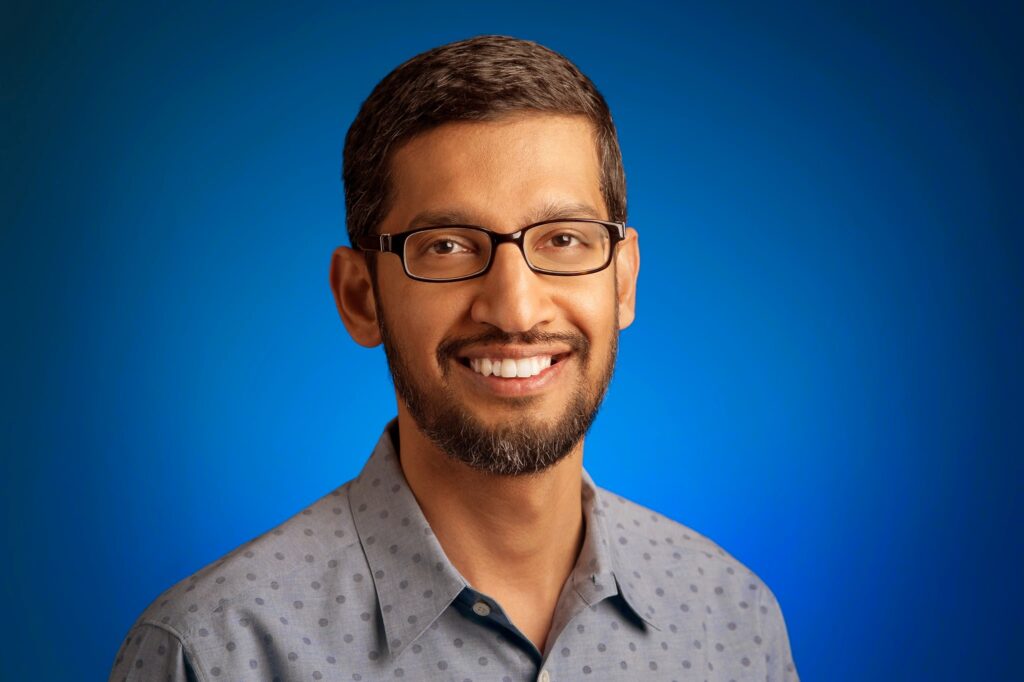

When most people picture a technology CEO, they imagine a charismatic showman, a relentless salesman, or a founder with a larger-than-life personality. Sundar Pichai broke that stereotype entirely. He didn’t build his legendary reputation in Silicon Valley by dominating rooms. Instead, he built it by listening longer than others spoke, asking sharper questions, and making incredibly difficult strategic decisions without turning every internal corporate disagreement into a public spectacle.
His journey from a modest, two-room apartment in Chennai, India, to leading one of the world’s most influential technology conglomerates isn’t simply a classic story about raw intelligence or ambition. It is a masterclass in psychological adaptation. Pichai’s legacy is defined by carrying the values of resourcefulness and scarcity into an internet age defined by infinite abundance, remaining remarkably composed while standing at the epicenter of the biggest technological revolutions in modern history. Today, as the CEO of both Google and Alphabet, Pichai oversees products used by billions, yet the foundational habits that shaped his leadership style were formed long before the tech world ever knew his name.
The Childhood of Sundar Pichai in Madras: Where Scarcity Created Curiosity
See also: http://Novaline.com.ng
Geoffrey Hinton: The Godfather of AI Who Turned Whistleblower on His Own Creation
Before becoming one of the most powerful executives in global technology, Sundar Pichai was simply a quiet boy growing up in Madras (now called Chennai). His family lived in a modest two-rooapartment where space was a luxury. Without private bedrooms, Sundar and his younger brother often slept on the living room floor. In this environment, privacy wasn’t something families expected; space was shared, routines overlapped, and every single household possession carried immense value.
His father, an electrical engineer at a British-owned manufacturing conglomerate, and his mother, a former stenographer, managed the household finances with meticulous care. Money was never entirely absent, but every family purchase required a deep discussion and every minor luxury required a tangible sacrifice. These precise conditions quietly shaped young Sundar’s relationship with technology, instilling a deep-seated belief that tools should be hyper-efficient, accessible, and profoundly functional.
The Rotary Phone That Changed Everything
When Sundar was twelve years old, a single object transformed the household forever: a black rotary telephone. While a telephone is a forgettable appliance for most families today, for young Sundar, it felt almost magical. He quickly became fascinated by the numbers—not because he enjoyed rote memorization, but because every unique phone number represented a vital connection to a world hidden far beyond the apartment walls.
After dialing a phone number just a single time, Pichai found he could remember it indefinitely. Family members and neighborhood visitors quickly noticed this extraordinary numerical memory and began testing him with complex strings of digits. He rarely, if ever, forgot. What looked like a parlor trick was actually the first sign of a deeper cognitive gift: his brain naturally mapped, organized, and categorized complex patterns. This exact structural instinct would later influence how he thought about indexing the world’s information via software and search engines.
How Small Fascinations Built Strategic Thinking
Pichai was never the loudest student in the classroom, nor was he constantly seeking validation from his teachers. Instead, he quietly became obsessed with complex physical systems. Train schedules, in particular, fascinated him. He spent hours studying routes, timings, and how seemingly unrelated regional movements fit together into one beautifully organized network.
These quiet, obscure hobbies didn’t attract much peer attention, but they reflected the core trait that would define his corporate career: a desperate desire to understand how massive, complex systems work from the inside out, rather than simply using them at face value.
The Road to Silicon Valley: Sacrifices and Global Transitions
Like many middle-class Indian families of the 1980s, the Pichai household viewed higher education not merely as a milestone, but as the single safest path toward economic opportunity. His parents chose to encourage his organic curiosity rather than applying immense academic pressure. This supportive environment helped Sundar excel academically without becoming consumed by toxic competition, eventually earning him a coveted admission to the prestigious Indian Institute of Technology (IIT) Kharagpur to study metallurgical engineering.
|
Degree / Qualification |
Field of Study |
Institution |
|---|---|---|
|
B.Tech |
Metallurgical Engineering |
IIT Kharagpur |
|
M.S. |
Materials Science and Engineering |
Stanford University |
|
MBA |
Business Administration |
The Wharton School of the University of Pennsylvania |
IIT Kharagpur and the Shock of Stanford
Life at IIT introduced Sundar to India’s brightest young minds, an environment where everyone had been the top student at their respective schools. Rather than trying to out-shout his brilliant peers, Sundar became known across the campus for his thoughtful analysis and quiet consistency. His professors noticed that he wasn’t satisfied with merely memorizing engineering formulas; he wanted to understand the molecular why behind material behaviors. He increasingly gravitated toward electronics and semiconductor technology, demonstrating an early knack for following compelling ideas rather than rigid academic labels.
When he was accepted into Stanford University for his Master’s degree, it was a life-changing achievement paired with a staggering financial hurdle. His father reportedly spent nearly an entire year’s salary to fund Sundar’s one-way flight to the United States. That single plane ticket represented a profound family risk—parents betting their entire life savings on a future they couldn’t see. For Sundar, the psychological weight of that sacrifice never truly disappeared.
Navigating Imposter Syndrome in America
Moving from Chennai to California in 1993 was less of a geographic shift and more of a profound psychological shock. Stanford introduced him to a world overflowing with unparalleled resources. Silicon Valley laboratories contained cutting-edge equipment he had only ever read about in textbooks, computers were ubiquitous, and American students discussed tech ideas with an astonishing, borderline aggressive confidence.
”When I landed in California, the world was so different. I remember wrestling with deep imposter syndrome, wondering if someone from a modest apartment in Chennai could truly compete with students educated in elite Western schools.”
The transition wasn’t glamorous; it was profoundly lonely, defined by navigating unfamiliar accents, cultural norms, and classroom expectations simultaneously. However, this grueling period of adaptation became his greatest leadership strength. He mastered the art of translating between entirely different worlds, learning to bridge contrasting cultural and technical perspectives instead of forcing people to choose sides. After later earning his MBA from the Wharton School, his professional thinking expanded completely: engineering had taught him precision, but business education taught him global scale.
Sundar Pichai: The Google Ascent and the Legendary “Chrome Wars”
When Sundar Pichai joined Google in 2004 as a product manager, the company was growing rapidly but remained entirely reliant on its core search engine. Few inside or outside the company imagined that Google would eventually evolve into a global powerhouse building operating systems, smartphones, cloud platforms, and advanced AI ecosystems. Pichai entered during this pivotal moment of raw possibility, and his very first assignment was managing the Google Toolbar.
The Strategic Genius Behind Google Chrome
At first glance, the Google Toolbar seemed like an ordinary, unglamorous browser add-on. In reality, Pichai saw it as a high-stakes chess match for corporate survival. He realized that if a rival web browser like Microsoft’s Internet Explorer decided to alter or remove Google as their default search engine, Google’s user base and ad revenue could vanish overnight. While most executives saw a simple browser utility, Pichai recognized a dangerous platform dependence.
|
Year |
Milestone / Event |
Strategic Impact |
|---|---|---|
|
2004 |
Pichai joins Google to manage the Google Toolbar |
Marks his entry into Google, handling an unglamorous but vital search add-on. |
|
2006 |
Microsoft temporarily disrupts Google search defaults |
Exposes Google’s dangerous platform dependence on rival browsers. |
|
2008 |
Pichai quietly aligns internal teams to launch Chrome |
Google Chrome debuts, introducing sandboxed security and unprecedented speed. |
|
2012 |
Chrome overtakes Internet Explorer as the #1 browser |
Validates Pichai’s long-term vision, securing Google’s gateway to the internet. |
Suggesting that Google build its own independent web browser from scratch was met with immense internal skepticism. Top executives, including then-CEO Eric Schmidt, questioned whether the massive risk and expense were truly necessary given Microsoft’s absolute monopoly over the browser market. Pichai didn’t push back with theatrical corporate warfare; instead, he persisted patiently. He refined his data models, listened intently to executive concerns, adjusted his arguments, and steadily built consensus.
When Google Chrome launched in 2008, it completely disrupted the internet. It wasn’t just faster; it fundamentally redefined consumer expectations around web browsing by introducing sandboxed security, automated background updates, and an elegant, minimalist interface. By the time Chrome became the undisputed number-one browser in the world, Pichai had proven something rare in Silicon Valley: you don’t have to be the loudest voice in the room to win a tech war. You just have to build the best system.
The Weight of the Crown: Leading Google and Alphabet
Silicon Valley during the 2000s and 2010s heavily celebrated aggressive, ego-driven founders. In a tech culture where confidence frequently overshadowed genuine collaboration, Pichai stood entirely apart. Colleagues consistently described him as a calm, empathetic diplomat who credited his engineering teams for successes while quietly absorbing the blame for failures. Because disagreements under his watch never became personal, he naturally became the executive that founders Larry Page and Sergey Brin trusted most to run the company.
|
Year |
Title / Role |
Key Responsibilities & Focus |
|---|---|---|
|
2008 |
VP of Product Development |
Oversaw the development and successful rollout of Google Chrome and productivity apps. |
|
2013 |
Head of Android |
Took over management of the Android operating system from its founder, Andy Rubin, aligning mobile strategy. |
|
2015 |
CEO of Google |
Appointed to lead Google’s core businesses during the massive Alphabet restructuring. |
|
2019 |
CEO of Alphabet Inc. |
Assumed full leadership of the entire Alphabet conglomerate as founders Larry Page and Sergey Brin stepped back. |
When Google restructured under the parent holding company Alphabet in 2015, Pichai was the inevitable choice to step up as CEO of Google, later taking the reins of Alphabet entirely in 2019. This transition represented one of the most complex successions in modern corporate history. Successors inherit historic expectations, and Pichai was tasked with following two iconic tech visionaries who had fundamentally reshaped human society. Every product decision invited intense comparison, and every public announcement carried added global scrutiny.
Leading Through Structural Crisis
The tenure of Sundar Pichai as CEO quickly shifted from traditional product announcements to managing unprecedented institutional crises. He found himself testifying before United States congressional hearings, defending Google against complex global antitrust lawsuits, navigating intense regulatory scrutiny regarding user data privacy, and addressing massive internal employee walkouts regarding corporate culture.
During these high-stakes moments, his trademark emotional steadiness transformed from a pleasant personality trait into an absolute organizational necessity. Whether reassuring nervous Wall Street investors, addressing thousands of frustrated employees, or communicating with billions of global users, his grounded, low-drama leadership style stabilized Google during its most turbulent social eras.
The 2026 AI Era: Balancing Innovation with Human Restraint
Perhaps no challenge has defined Sundar Pichai’s legacy more than the frantic, high-stakes race for Artificial Intelligence. Under his early directive, Google pivoted to become an “AI-first” company long before generative models became part of mainstream global conversation. However, the technological landscape shifted toward real-time generative agents. Sundar Pichai found himself steering Google through its most critical pivot yet. He is balancing the safety of Google’s legacy Search engine with the raw capabilities of the Gemini ecosystem.
For Pichai, the AI race isn’t just an engineering problem. It is a profound ethical dilemma. This dilemma impacts the digital fabric of human reality. Moving too slowly risks corporate irrelevance in an unforgiving tech landscape. Yet, moving too quickly risks unleashing unintended societal consequences. These consequences range from algorithmic bias to massive misinformation cycles.
He guides Alphabet’s massive investments into DeepMind and next-generation neural networks. Pichai approaches AI with calculated caution. This is the same caution that he applied to the rotary phone in Chennai decades ago. He carries the distinct responsibility of executing global innovation. Meanwhile, he must maintain absolute human restraint.
The Legacy of the Quiet Leader: Sundar Pichai
Sundar Pichai has remained fiercely private. This is despite controlling an organization with a multi-trillion-dollar market footprint. He actively avoids cultivating a cult of celebrity. He shuns theatrical social media stunts. Furthermore, he maintains a remarkably grounded personal life with his college sweetheart and wife, Anjali Pichai. The two originally met back during his undergraduate days at IIT Kharagpur.
Ultimately, the most surprising element of the biography of Sundar Pichai isn’t that he became the CEO of Alphabet. It is actually how he did it. This era frequently equates leadership with volume and theatrical charisma. Yet, Pichai proved that quiet confidence, intellectual patience, and deep empathy work better. They are far more sustainable forces for scaling global technology.
Sundar Pichai fingerprints are quietly embedded across the entire digital infrastructure of modern human life. Users participate in a global ecosystem daily. This happens every time a person opens a Chrome tab or searches a location on Google Maps. It happens when watching a video on YouTube or interacting with a generative AI model. This massive ecosystem was refined by a quiet engineer. He simply spent a little longer listening, observing, and asking the right questions.