
Tears in Madeira: The Boy with the Racing Heart
Cristiano Ronaldo was born in Madeira in February 1985, the youngest of four children. His mother worked long shifts as a cook and a cleaner. His father tended gardens for the local council and washed kits for a small club named Andorinha.
Money was scarce in that house. So scarce that Ronaldo has said he might have grown up laying bricks instead of scoring goals. Still, football surrounded him, stitched into daily life through his father’s job at that tiny local club.
The Restless Scholar
See also: http://Novaline.com.ng
Kylian Mbappé Biography: Bondy to Real Madrid, the 2026 World Cup Story
School never suited him. He was restless and quick-tempered, eventually expelled after throwing a chair at a teacher he felt had disrespected him. Yet nobody could argue with his feet. On a ball, that same restless boy turned calm and precise.
At fifteen, doctors found something wrong with his heart. His resting pulse raced dangerously fast, a condition called tachycardia that threatened to end his career before it began. Surgeons performed a rare procedure, using a laser to correct the faulty rhythm inside his chest.
He left the hospital within hours. Days later, he sprinted through training as if nothing had happened. That defiance, more than any highlight reel, revealed exactly who Cristiano Ronaldo would become.
A Haunting Loss
Then came 2005, the year that broke him. His father had fought in Portugal’s colonial war in Angola and returned home changed, drifting toward alcohol. Their relationship stayed distant and difficult for years afterward.
Jose Dinis Aveiro died that September at fifty-two, from a liver condition tied to years of drinking. Ronaldo was twenty, playing for Manchester United, thousands of miles from Madeira. He could not say goodbye in person, and that absence has haunted him ever since.
The Monastic Tribute
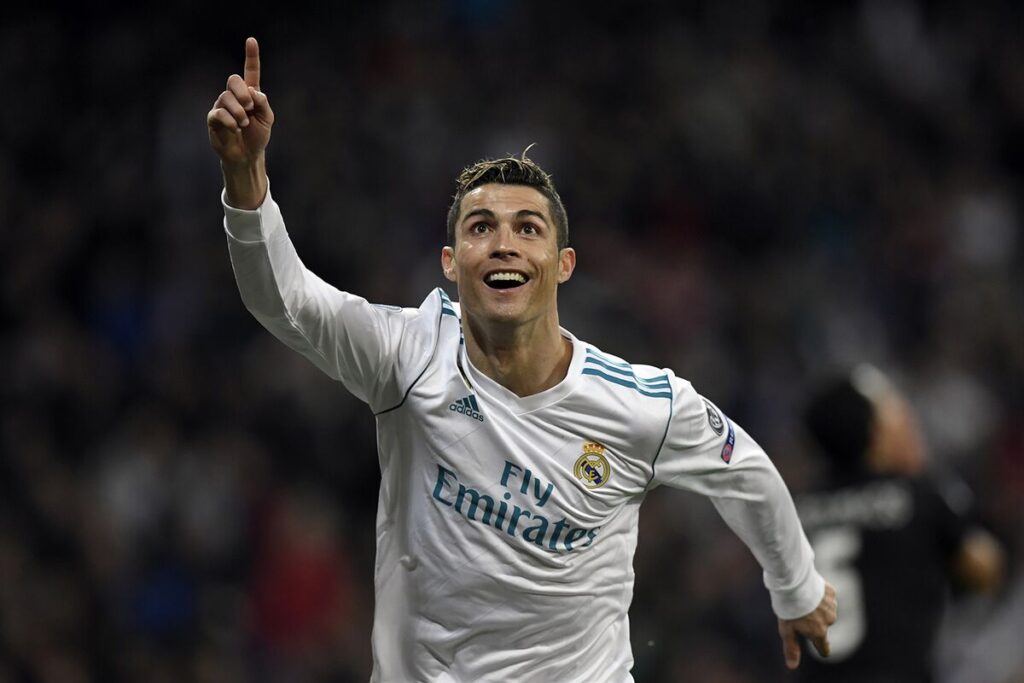
Instead, he chose a different kind of tribute. He gave up alcohol entirely, dedicating himself to a discipline that bordered on monastic. Every goal celebrated with a glance toward the sky became a quiet conversation with the father who never saw him become a global icon.
Re-Inventing the Winger at Old Trafford
Sporting Lisbon gave Ronaldo his first stage, but Manchester United gave him his transformation. Sir Alex Ferguson signed him in 2003 as a flashy winger who dazzled more than he scored.
Ferguson saw something deeper underneath the tricks. So he pushed Ronaldo relentlessly, demanding end product instead of style. Teammates like Ruud van Nistelrooy clashed with him over his showboating, and those confrontations stung.
Ronaldo listened. He cut the unnecessary flourishes and added ruthless finishing to his game. As a result, goals started arriving in bunches instead of trickles, season after season.
By 2007, the winger had become a genuine goal machine. His work in the gym matched his obsession on the pitch, building a physique designed purely for speed, power, and leaping.
In 2008, Ronaldo won his first Ballon d’Or, turning years of transformation into a single trophy. Manchester United fans still describe that Old Trafford chapter as the making of a legend, not just a talented boy from Madeira.
Cristiano Ronaldo’s legacy is defined by an incredible five Ballon d’Or awards. On the continental stage, he has smashed records with 140 historic Champions League goals. Furthermore, his legendary international career features an astonishing 233 caps for Portugal.
Conquering the World in the White of Madrid
The International Hero: Leading Portugal Against All Odds
Portugal had never won a major trophy before Ronaldo arrived, and doubters wondered whether a small nation could ever break through. Euro 2016 changed everything, though not in the way anyone expected.
Ronaldo tore a knee ligament early in the final against France and left the pitch in tears. He could not finish the match as a player, so he found another way to contribute.
From the touchline, he coached, encouraged, and shouted instructions like an assistant manager. Portugal won in extra time, and Ronaldo celebrated as hard as anyone despite barely touching the ball.
Over twenty-three years with the national team, he collected three major titles for a country that had won nothing before him. His international goal tally eventually surpassed every player in the history of men’s football. Yet the number that mattered most to him was always the crest on his chest.
The Final Chapter and an Unmatched Legacy
By the summer of 2026, Ronaldo arrived at the World Cup in North America as a forty-one-year-old marvel, still starting for Portugal under manager Roberto Martinez. Critics questioned whether he belonged on the pitch, and the noise grew louder after a shaky opening draw against DR Congo.
He answered the only way he ever has: on the field. Against Uzbekistan, he scored twice, reaching ten World Cup goals and becoming Portugal’s all-time leading scorer in the tournament. That night, he also became the first man to score in six different World Cups, a stretch running from 2006 to 2026.
Before the round of 16 against Spain, Ronaldo admitted something he had avoided for years. “This will be my last World Cup,” he told reporters, still hoping the game itself would not be his last. Portugal lost 1-0 in a tense Dallas-area clash, eliminated by a late Spanish goal, and his sixth World Cup ended in heartbreak rather than glory.
Still, he refused to frame it as tragedy. He spoke instead about giving the sport everything across twenty-three years of international football, describing a conscience clear enough to live with either way. Whether he retires from Portugal entirely remains unresolved, a decision he says will come only with time to think.
What Ronaldo leaves behind goes beyond trophies and scoring records. He leaves a blueprint: obsessive preparation, relentless self-improvement, and total refusal to accept decline as destiny. Because the boy who once feared for his own heart built himself into the most durable engine the sport has ever seen.
Frequently Asked Questions
How many World Cups did Cristiano Ronaldo play in?
Ronaldo played in six FIFA World Cups: 2006, 2010, 2014, 2018, 2022, and 2026. He is the first man in history to score in six different World Cup tournaments.
Was 2026 the last world cup of Cristiano Ronaldo?
Yes. He confirmed before Portugal’s round of 16 match against Spain that 2026 would be his final World Cup, though he left international retirement undecided.
How did the father of Cristiano Ronaldo die?
Jose Dinis Aveiro died in September 2005 from a liver condition linked to long-term alcoholism. He was 52. Ronaldo was 20 and playing for Manchester United at the time.
Did Cristiano Ronaldo have heart surgery?
At fifteen, Ronaldo was diagnosed with tachycardia, an abnormally fast resting heart rate. Doctors performed cardiac ablation to correct it, and he returned to training within days.
What is the biggest international achievement of Cristiano Ronaldo?
Winning Euro 2016 with Portugal, the country’s first major trophy. Ronaldo has said the title carries the same weight for him as a World Cup.