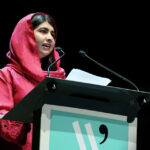


How Chimamanda Ngozi Adichie a girl from Nsukka campus house once occupied by Chinua Achebe became the most consequential storyteller of her generation.
The Global Impact of Chimamanda Ngozi Adichie
Few living writers have changed how the world talks about womanhood, race, and belonging quite like Chimamanda Ngozi Adichie. Her sentences travel far beyond the page. Indeed, they turn into TED talks watched by millions. They also become a line on a Beyoncé track, or a T-shirt slogan worn on runways from Paris to Lagos.
Adichie writes from a distinctly Nigerian vantage point, yet her stories land everywhere. Readers in Lagos, London, and Los Angeles, for instance, recognize themselves in her characters. That reach is rare. Consequently, literary critics now describe her as one of the defining voices of contemporary world literature, not merely African literature.
Her influence extends past bookshelves into classrooms, boardrooms, and protest signs. Meanwhile, a new generation of African writers cites her as the reason they believed their own stories mattered. To understand her impact, we have to go back to where it began: a quiet university town in southeastern Nigeria.
Where the Story of Chimamanda Ngozi Adichie Began
Chimamanda Ngozi Adichie was born in Enugu on September 15, 1977, the fifth of six children in an Igbo family. Her parents, however, made their home in Nsukka, where both worked at the University of Nigeria. James Nwoye Adichie, her father, became the university’s first professor of statistics. He later rose to deputy vice-chancellor. Meanwhile, her mother, Grace Ifeoma, served as the institution’s first female registrar. Academic rigor, in other words, was simply the air the family breathed.
A House That Once Belonged to Chinua Achebe
See also: http://Novaline.com.ng
J.K. Rowling: The Untold Story of Struggle, Grief, and a Boy Wizard
The Adichie family lived in a campus house previously occupied by Chinua Achebe, the author of Things Fall Apart. That detail is not a footnote; it shaped everything. At age ten, Chimamanda Ngozi Adichie read Achebe’s novel and felt something shift inside her. For the first time, she encountered characters who looked like her, spoke like her, and belonged to her world. Essentially, the discovery taught her that people who looked like herself could “live in books.” That realization, in turn, became the seed of her entire career.
Life in Nsukka was not without hardship. Her family had lost almost everything during the Nigerian Civil War, including both of her grandfathers. Consequently, the shadow of Biafra would eventually follow her into her fiction, most powerfully in a novel still years away.
From Medicine to the Written Word
Like many bright Nigerian students of her era, Adichie was steered toward a practical career. Accordingly, she enrolled at the University of Nigeria to study medicine and pharmacy. After a year and a half, though, she knew the lab bench was not where she belonged. At nineteen, she left Nigeria for the United States, landing first at Drexel University in Philadelphia.
She soon transferred to Eastern Connecticut State University to stay close to a sister practicing medicine nearby. There, she pursued communications and political science, graduating summa cum laude in 2001. Afterward, she completed a master’s degree in creative writing at Johns Hopkins University. She also studied African history at Yale. Meanwhile, she had already started publishing. A poetry collection, Decisions, appeared in 1997. Then came a play, For Love of Biafra, in 1998. Neither book made headlines. Both, however, revealed a writer already circling her subject.
How Chimamanda Ngozi Adichie Redefined Modern African Literature
Everything changed in 2003, when Chimamanda Ngozi Adichie published her debut novel, Purple Hibiscus. The book follows a teenage girl trapped by a devout, controlling father. Beyond his house, though, she discovers quiet freedoms. Critics praised its restraint and emotional precision. Ultimately, the novel won the Commonwealth Writers’ Prize for Best First Book. It was an early sign that a major talent had arrived.
Purple Hibiscus and a New Literary Voice
What set Purple Hibiscus apart was its refusal to explain Nigeria for outsiders. Instead, Adichie wrote Igbo words without italics, Nigerian food without footnotes, and family dynamics without apology. She simply trusted her reader. That confidence, unusual for a debut novelist, ultimately became a hallmark of her entire body of work.
Half of a Yellow Sun and the Weight of History
Three years later, in 2006, she released Half of a Yellow Sun. The sweeping novel is set during the Nigerian Civil War. It traces the Biafran secession through characters whose losses mirror her own family’s history. Consequently, it won the Orange Broadband Prize for Fiction in 2007, cementing her status internationally. For countless readers outside Nigeria, the novel became their first real encounter with Biafra’s devastation. In 2008, moreover, the MacArthur Foundation honored her with one of its coveted fellowships, often called the “genius grant.”
Americanah and the Immigrant Gaze
Five years later, in 2013, Adichie published Americanah. The novel follows a young Nigerian woman who moves to the United States. There, for the first time, she confronts race as a Black immigrant. The book won the National Book Critics Circle Award and became a cultural touchstone. It gave language to experiences many immigrants had felt but rarely seen articulated so precisely. Consequently, Americanah remains, for many readers, her defining masterpiece.
“We should all be feminists.”Chimamanda Ngozi Adichie, TEDxEuston, 2012
The Feminism of Chimamanda Ngozi Adichie
A single talk, delivered at TEDxEuston in 2012, would eventually reach far beyond any literary festival. In it, Adichie argued plainly for gender equality, drawing on stories from her own Nigerian upbringing. The talk later became a slim, powerful book: We Should All Be Feminists, published in 2014.
From TEDxEuston to Beyoncé’s “Flawless”
In 2013, Beyoncé sampled the talk directly on her song “Flawless.” Overnight, it introduced Adichie’s words to a global pop audience. Soon afterward, Dior transformed the book’s title into a now-iconic white T-shirt, worn by models and celebrities worldwide. Few essayists have ever crossed so quickly from lecture hall to runway to radio.
Dear Ijeawele and a Manifesto for Daughters
Adichie followed with Dear Ijeawele, or A Feminist Manifesto in Fifteen Suggestions, in 2017. She wrote it as a letter to a friend raising a daughter. The book distilled her feminism into practical, everyday guidance rather than abstract theory. For many parents, it became something closer to a handbook than an essay collection.
The Enduring Legacy of Chimamanda Ngozi Adichie
Every career has a season of silence, and Adichie’s arrived after Americanah. Personal loss played a significant role. Her father, James, passed away in 2020. Grace, her mother, followed in 2021. Afterward, she channeled her grief into Notes on Grief, a spare memoir. It grew out of an essay The New Yorker first published.
Notes on Grief and a Season of Loss
The memoir departed sharply from her earlier, more expansive fiction. Sentences grew shorter. Silences grew louder. Reviewers called it one of the most honest accounts of mourning in recent memory, precisely because it refused easy comfort. Readers who had never lost a parent still found themselves recognizing the shape of that particular grief.
Dream Count and a Decade of Silence Broken
Ten years after Americanah, Adichie returned to fiction with Dream Count in 2025. The novel follows four women: Chiamaka, Zikora, Omelogor, and Kadiatou. Each navigates love, ambition, and survival against the backdrop of the pandemic. It was longlisted for the 2025 Women’s Prize for Fiction. Critics were divided; some praised its empathy and ambition, while others found it uneven after such a long wait. Either way, its release proved that anticipation for her work had never faded.
Mentor to a New Generation
Beyond her own books, Adichie founded the Purple Hibiscus Trust Creative Writing Workshop in Lagos. The annual program trains emerging Nigerian writers, and dozens of its graduates have since published acclaimed work of their own. Furthermore, universities from Yale to Edinburgh have awarded her sixteen honorary doctorates. That recognition stretches well past literature into public life.
Chimamanda Ngozi Adichie once wrote that stories can break a people’s dignity, but stories can also repair it. Her own career stands as proof. A girl from a Nsukka campus house, raised among borrowed books, ultimately wrote a shelf entirely her own.
Frequently Asked Questions
Who is Chimamanda Ngozi Adichie?
She is a Nigerian novelist and essayist, born in 1977 in Enugu. Readers celebrate her for Purple Hibiscus, Half of a Yellow Sun, and Americanah, plus her writing on feminism and identity.
What is Chimamanda Ngozi Adichie’s most famous book?
Americanah, published in 2013, is widely regarded as her most famous novel. It won the National Book Critics Circle Award and reached a vast international audience.
Why is Chimamanda Ngozi Adichie important to feminism?
Her TEDx talk and essay We Should All Be Feminists reshaped mainstream conversations about gender equality. Beyoncé sampled the talk on “Flawless,” and Dior turned its title into a widely worn T-shirt.
Where did Chimamanda Ngozi Adichie grow up?
She grew up in Nsukka, a university town in southeastern Nigeria. Her family’s campus house was once occupied by author Chinua Achebe.
What is Chimamanda Ngozi Adichie’s latest novel?
Dream Count, released in 2025, is her fourth novel and her first in a decade. It follows four women confronting love, ambition, and survival.