

Before Hogwarts existed, there was a grieving daughter, a single mother on welfare, and twelve rejection letters. This is the human story behind the world’s best-known wizard Joanne Rowling.
The Early Life and Struggles of Joanne Rowling
Joanne Rowling was born on July 31, 1965, in Yate, a small town near Bristol, England. Her father worked as an aircraft engineer. Meanwhile, her mother worked as a science technician at the school Joanne later attended. Because books filled their home from the start, storytelling came naturally.
At just six years old, Joanne wrote her first story, a tale about a rabbit called Rabbit. Her mother read constantly and encouraged both daughters toward storytelling. Meanwhile, her father read them classics like The Wind in the Willows at bedtime. That early exposure planted something permanent in young Joanne.
Life near a family named Potter left its own quiet mark. For instance, she liked their surname and tucked it away without knowing why. Nobody, of course, could have predicted where that small detail would eventually lead.
When Joanne turned fifteen, everything shifted. Specifically, her mother received a diagnosis of multiple sclerosis, an incurable disease of the nervous system. Suddenly, home became a harder place to navigate. She later described those teenage years as difficult, marked by strain with her father.
Despite the turmoil, Joanne pursued her education with determination. She studied French and Classics at the University of Exeter. However, she later admitted she should have studied English instead. Still, that unexpected choice gave the wizarding world its Latin-rooted spells and incantations.
How Adversity Shaped Her as a Writer
See also: http://Novaline.com.ng
After graduating, Joanne worked in London as a researcher for Amnesty International. She wrote for herself during quiet moments, though nothing reached publication. Instead, her real transformation began on an ordinary train ride in 1990.
Traveling from Manchester to London, her train stalled for four hours. Because she had no pen nearby, she simply let her imagination wander. By the journey’s end, a boy who didn’t know he was a wizard had fully formed in her mind. Consequently, that delay became one of publishing history’s most consequential accidents.
Tragedy followed almost immediately. Her mother died in December 1990, only months after that train journey. Rowling has said the loss profoundly affected her writing. Therefore, grief fed directly into Harry’s own experience of losing his parents and became raw material for the page.
Seeking a fresh start, Joanne Rowling moved to Porto, Portugal, to teach English. There, she met journalist Jorge Arantes, and the two married quickly. Their daughter, Jessica, arrived in 1993. Unfortunately, the marriage collapsed within months, and Rowling later called it “short and catastrophic.”
With her manuscript and infant daughter, Rowling relocated to Edinburgh, Scotland, near the end of 1993. She arrived broke, divorced, and grieving. Consequently, she depended on state welfare just to survive, living on roughly seventy pounds a week.
“Until you’ve actually been there, you’ve no idea how soul-destroying it is to have no money.” Joanne Rowling
Still, she refused to abandon her manuscript. Instead, she carried it to Edinburgh cafés while Jessica slept beside her in a pram.
The Magic Begins with Joanne Rowling and Harry Potter
Money was tight, so Rowling often nursed a single coffee for hours at Nicolson’s Café. Later, she moved her routine to The Elephant House. Because her flat lacked heating some days, cafés offered warmth as much as workspace. Page by page, Harry Potter and the Philosopher’s Stone took shape.
By 1995, the manuscript was finally complete. An agent agreed to represent her, and submissions began. Rejection followed rejection, twelve times over. Notably, one editor bluntly advised her to find a day job instead.
Then came an unlikely breakthrough. Bloomsbury’s chairman, Nigel Newton, handed the first chapter to his eight-year-old daughter, Alice. She finished it and immediately demanded the rest. That childlike enthusiasm, in the end, convinced Bloomsbury to take a chance.
Even so, expectations stayed modest. Bloomsbury printed only 500 copies initially and paid Rowling a £2,500 advance. Meanwhile, editor Barry Cunningham warned her plainly that children’s books rarely made anyone rich. Publishers also suggested she use initials, fearing boys wouldn’t read a book by a woman. That advice, ultimately, gave the world ” Joanne Rowling.”
Global Success Changes Her Life Forever
Harry Potter and the Philosopher’s Stone reached shelves in June 1997. Word spread quickly among young readers and their parents. Within a few years, the series had become an undeniable phenomenon spanning bookstores worldwide.
By 1999, three novels sat atop American bestseller lists simultaneously. Meanwhile, Warner Bros. secured film rights, and the first movie premiered in 2001. Suddenly, Rowling’s earnings crossed into the tens of millions. Because of that shift, a welfare recipient became one of Britain’s wealthiest women.
Seven books eventually completed the series, concluding with Harry Potter and the Deathly Hallows in 2007. Eight films followed, alongside translations spanning dozens of languages. Meanwhile, sales climbed past 500 million copies globally, making the series one of publishing’s greatest successes.
This transformation carried emotional weight beyond money. Indeed, the single mother who once worried about feeding her daughter now funded hospitals and research centers. For Joanne Rowling, wealth became less about personal comfort and more about honoring where she started.
Beyond Hogwarts: The Evolving Legacy
Rowling’s philanthropy grew alongside her fortune. In 2000, she established the Volant Charitable Trust to fight social deprivation, particularly among women and children. A decade later, she donated £10 million to found a multiple sclerosis research clinic. Notably, she named it for her late mother, Anne.
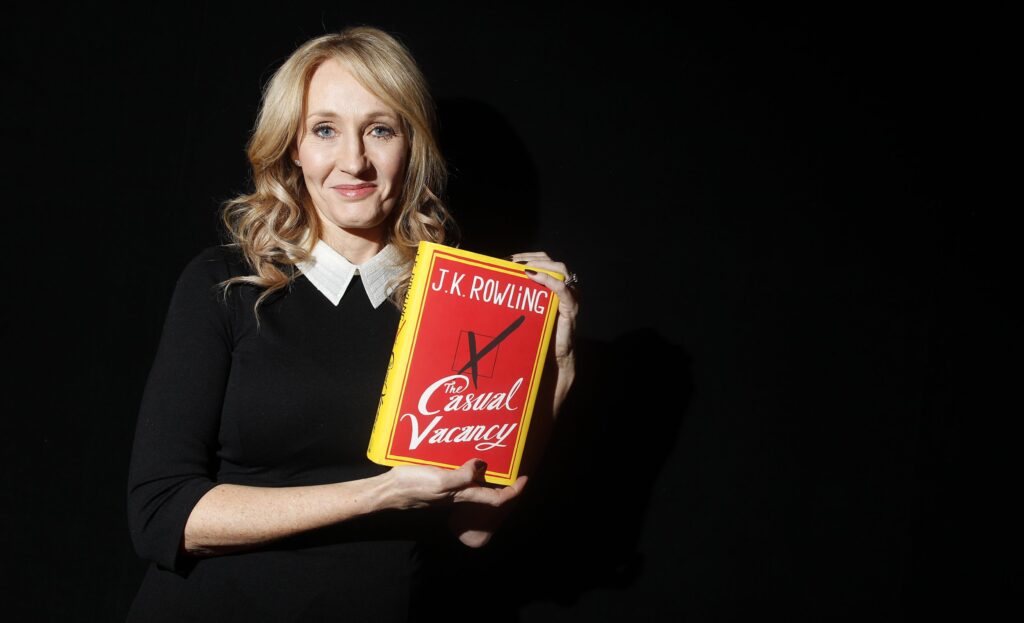
Writing continued well beyond Hogwarts too. In 2012, Rowling published The Casual Vacancy, a novel aimed squarely at adult readers. She also launched a crime fiction series under the pseudonym Robert Galbraith. Therefore, her range extended far past children’s fantasy.
Rowling’s public life has grown more complicated in recent years. Specifically, her comments on gender identity sparked significant controversy. This debate drew both strong support and sharp criticism from different corners of the public. Meanwhile, she has continued funding causes tied to women’s rights, including a crisis center in Edinburgh. These positions remain genuinely contested, and readers hold sharply differing views on them.
Regardless of the debates surrounding her, Rowling’s cultural footprint remains enormous. Her books introduced entire generations to reading for pleasure. Because of that impact, literacy advocates frequently credit her with revitalizing children’s publishing worldwide.
Today, theme parks, stage productions, and streaming adaptations keep her fictional world expanding. Hogwarts Legacy alone sold millions of copies as a video game. Clearly, Harry Potter has outgrown its original seven books entirely.
Conclusion
Joanne Rowling’s story ultimately resists easy summary. She lost her mother, endured poverty, and faced rejection again and again. Yet she kept writing anyway, turning private pain into a story that reached millions of strangers. That persistence, more than any single achievement, defines her legacy.
Frequently Asked Questions About Joanne Rowling
Why is the biography of Joanne Rowling considered so inspiring?
Rowling wrote Harry Potter while grieving her mother, recovering from divorce, and living on welfare in Edinburgh. Twelve publisher rejections came before Bloomsbury finally said yes, making her rise a story of persistence rather than easy luck.
Did Joanne Rowling really write Harry Potter in cafés?
Yes. She often wrote at Nicolson’s Café and later The Elephant House in Edinburgh, nursing a single coffee for hours while her infant daughter, Jessica, slept beside her in a pram.
How many publishers rejected Joanne Rowling before Harry Potter was published?
Twelve publishers turned down the manuscript. Bloomsbury accepted it only after chairman Nigel Newton’s eight-year-old daughter, Alice, read the first chapter and demanded to see the rest.
What inspired Joanne Rowling to write Harry Potter?
The idea arrived during a delayed train journey from Manchester to London in 1990, when the character of a boy who didn’t know he was a wizard fully formed in her imagination.
What philanthropic work is Joanne Rowling known for?
Joanne Rowling founded the Volant Charitable Trust in 2000 and donated £10 million in 2010 to establish a multiple sclerosis research clinic at the University of Edinburgh, named after her mother, Anne.