
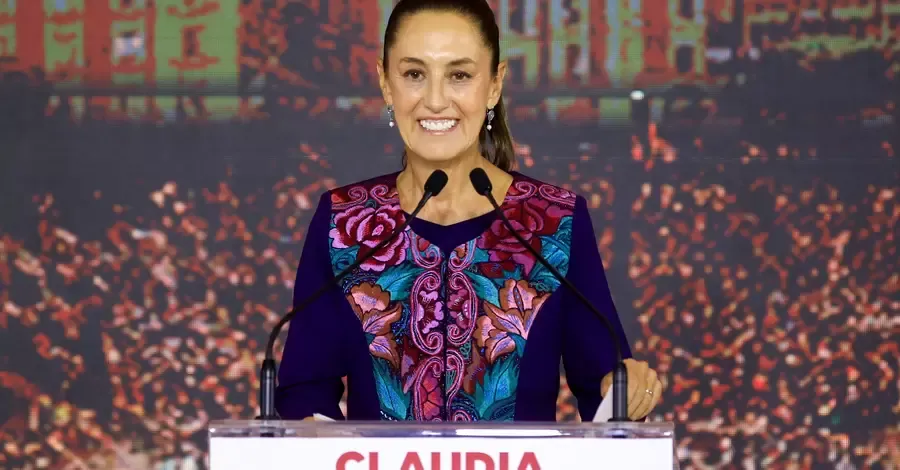

A physics classroom in Mexico City, decades before any campaign trail. That’s where Claudia Sheinbaum first learned to test an idea until it broke or held. She carried that habit into government, and it eventually carried her into the National Palace.
Today, Claudia Sheinbaum leads the world’s second-largest Spanish-speaking nation. However, her path there had little to do with traditional political ambition. It ran through laboratories, climate research, and years spent solving Mexico City’s messiest urban problems.
A Childhood Shaped by Science and Activism
See also: http://Novaline.com.ng
Mark Carney: The Banker Who Talked His Way Into Downing Street’s Northern Cousin
Claudia Sheinbaum was born on June 24, 1962, in Mexico City. Her parents were scientists, and her household treated curiosity as a daily habit rather than a hobby. As a teenager, she joined student movements that pushed for democratic reform across Mexico.
That early activism mattered. It planted the belief that public institutions could actually change, given enough pressure and patience. Meanwhile, her academic interests pulled her toward physics and, later, energy engineering.
Her parents weren’t the only scientists in the family. Her mother, Annie Pardo Cemo, was a biologist and longtime UNAM professor, while her father, Carlos Sheinbaum, worked as a chemical engineer. Both came from Jewish immigrant families, with roots in Lithuania and Bulgaria, giving Claudia Sheinbaum a heritage that later made history in its own right.
How Claudia Sheinbaum Built a Scientific Career at UNAM and Berkeley
Claudia Sheinbaum enrolled at the National Autonomous University of Mexico, better known as UNAM, to study physics. She earned her bachelor’s degree in 1989. From there, she stayed at UNAM for both a master’s degree and a doctorate in energy engineering.
Part of that doctoral work took her outside Mexico entirely. She conducted her research at Lawrence Berkeley National Laboratory in California, comparing energy consumption trends between Mexico and other industrialized nations. Afterward, she returned home and joined UNAM’s engineering faculty in 1995.
Her scientific credibility soon reached a global stage. Sheinbaum contributed to the United Nations’ Intergovernmental Panel on Climate Change, helping author its 2007 assessment on climate change mitigation. That report earned the IPCC a share of the Nobel Peace Prize, alongside Al Gore, for advancing public understanding of man-made climate change. She later co-wrote a chapter of the IPCC’s 2013 report as well.
The Journey of Claudia Sheinbaum From Research Labs to City Government
Claudia Sheinbaum’s move into government wasn’t sudden. She served as environment secretary for Mexico City from 2000 to 2006, working under a mayor named Andrés Manuel López Obrador. Under her watch, the city rolled out the Metrobús rapid-transit system and built a second deck atop its main ring road. That partnership with López Obrador would shape the next three decades of her career.
After López Obrador’s 2006 presidential bid fell short, Sheinbaum returned to academic research at UNAM. However, politics pulled her back in 2014, when she left the PRD to help found Morena, López Obrador’s new party. She won her first elected post in 2015, running the Tlalpan borough of Mexico City until 2017.
Years later, she won her own citywide mandate. Voters elected her mayor of Mexico City in 2018, making her the first woman to hold that office. As mayor, she expanded the city’s metro system, pushed solar energy projects, and built a reputation as a technocrat who preferred data over drama.
Her tenure wasn’t without controversy. A metro overpass collapse in 2021 killed 26 people and drew sharp criticism of her infrastructure oversight. Still, she left office in 2023 with strong approval numbers, positioning herself as López Obrador’s natural successor.
Road to the Presidency for Claudia Sheinbaum
Morena, Mexico’s ruling party, selected Claudia Sheinbaum as its 2024 presidential candidate after she outpaced her closest rival in internal party surveys. The party’s leadership confirmed she had defeated former Foreign Affairs Secretary Marcelo Ebrard by a wide margin. From there, the general election was rarely close.
She faced Xóchitl Gálvez and Jorge Álvarez Máynez in the June 2024 vote. Election authorities projected Sheinbaum would capture between 58.3% and 60.7% of the vote, a decisive win by any measure. Both rivals conceded within hours.
Her victory speech leaned on legacy rather than triumph. She told supporters that women had “come to lead the destiny of our beautiful nation” for the first time in the country’s history. It was a line aimed squarely at Mexican girls watching from home.
Taking Office: A Historic First
Claudia Sheinbaum took the presidential oath on October 1, 2024, becoming Mexico’s first woman president. She also became the first president of Jewish heritage, another historic marker for a country still working through questions of representation. The ceremony drew dignitaries from across Latin America and Africa.
In her inaugural address, she outlined priorities that sounded familiar to Morena voters: expanded social programs, human rights guarantees, and a peaceful foreign policy stance. She also pledged to keep Mexico’s state oil company producing near 1.8 million barrels a day. Continuity, not reinvention, was the opening message.
Governing in AMLO’s Shadow
Sheinbaum inherited a movement, not just an office. Her predecessor’s “Fourth Transformation” agenda still dominates Morena’s identity, and she has largely built on it rather than break from it. Supporters credit these social programs with helping lift 8.3 million Mexicans out of poverty between 2022 and 2024.
That inherited popularity gave her room to maneuver. With Morena controlling large majorities in Congress, she has pushed ambitious reforms with relatively little resistance. In February 2026, for example, she proposed a sweeping overhaul of Mexico’s electoral system, despite pushback from within her own coalition.
How Mexicans Rate Her Performance
Approval numbers have stayed remarkably strong throughout her first two years. A Mitofsky poll found 68.4% approval in March 2026, though that figure had slipped slightly for six consecutive months. Even so, she remains one of the most popular sitting leaders in Latin America.
Not every survey agrees on the exact number. A separate AtlasIntel poll from the same period put her support closer to 53.9%. Regardless of methodology, both surveys point to the same conclusion: most Mexicans still back her.
Navigating a Tense Relationship With Washington
Foreign policy has tested Sheinbaum in ways domestic politics rarely did. Trade tensions with the United States have simmered throughout 2026, complicating a relationship both countries depend on economically. Immigration enforcement has added fresh strain to that dynamic.
Tensions escalated further in mid-2026. Mexico demanded criminal investigations after migrants were killed by ICE agents, a move that put Sheinbaum at odds with US immigration policy. Despite the friction, she still accepted an invitation to attend the World Cup final as President Trump’s guest, signaling she prefers open channels over public confrontation.
That balancing act defines much of her foreign policy approach. She criticizes specific US actions without abandoning the broader relationship. Trade, security cooperation, and migration remain too entangled for either country to walk away easily.
Domestic Challenges Beyond the Numbers
Security remains Mexico’s most stubborn problem, and it hasn’t spared local government. In July 2026, a mayor was shot dead in his own town hall, months after surviving an earlier assassination attempt. Incidents like this underscore how far cartel violence still reaches into Mexican civic life.
Sheinbaum has continued her predecessor’s security strategy, with adjustments rather than a full rewrite. Critics argue the approach hasn’t gone far enough. Supporters counter that homicide rates have shown gradual improvement since she took office, even if progress feels slow to families living with daily insecurity.
Life Outside the National Palace
Claudia Sheinbaum rarely discusses her personal life in public, but the broad outline is well documented. She was married to Carlos Imaz, a PRD political figure, from 1987 until their divorce in 2016. Together they raised two children, a daughter named Mariana and a son named Rodrigo.
She later reconnected with Jesús María Tarriba, a mathematician and financial risk specialist at the Bank of Mexico. The two had briefly dated as students decades earlier. They married in a small civil ceremony in November 2023, shortly before her presidential campaign began in earnest.
What Comes Next for Claudia Sheinbaum
Sheinbaum’s six-year term runs until 2030, giving her ample time to shape her own legacy rather than simply manage López Obrador’s. Electoral reform, energy policy, and US relations will likely define how history judges her. Meanwhile, her scientific background continues to influence her public style: measured, data-driven, and rarely improvisational.
Whatever comes next, she has already reshaped what leadership can look like in Mexico. A climate scientist now sets the country’s course from the same palace where generals and party bosses once ruled. That shift alone marks a genuine turning point in Mexican political history.
“For the first time, we women have come to lead the destiny of our beautiful nation.”
— Claudia Sheinbaum, October 1, 2024