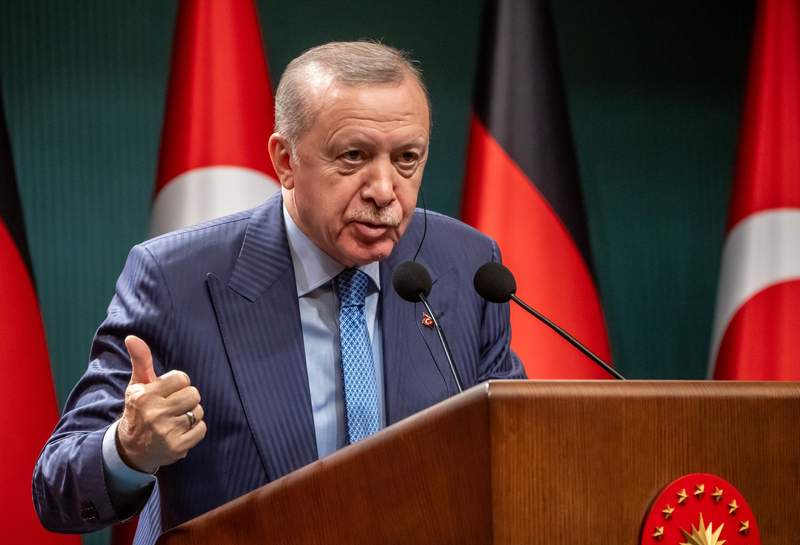

Warplanes screamed over Ankara’s parliament building on the night of July 15, 2016. Inside, lawmakers ducked under desks as bombs shook the chamber where they worked. Outside, ordinary Turks answered a call broadcast through a mobile phone app and poured into the streets to block tanks with their bodies. By morning, the coup against Recep Tayyip Erdoğan had collapsed, and the man it targeted emerged more powerful than before. That night has become the defining myth of his presidency. However, understanding Recep Tayyip Erdoğan requires going back decades earlier, to a working-class Istanbul neighborhood where a shopkeeper’s son learned to fight for every inch of ground he gained.
From Selling Simit to Studying Scripture
Ursula von der Leyen: The Doctor Who Became Europe’s Most Powerful Official
The story of Recep Tayyip Erdoğan
Erdoğan was born on February 26, 1954, in the port district of Kasımpaşa. His father worked as a coastguard officer, and money stayed tight throughout his childhood. As a boy, Erdoğan reportedly sold lemonade and sesame bread on the street to help support his family. That hustle shaped him. Meanwhile, his parents pushed him toward religious education, enrolling him in an imam-hatip school built to train prayer leaders and preachers. He later studied management at Istanbul’s Marmara University, though some biographers still dispute the exact nature of his degree.
In his youth, Erdoğan also played semi-professional football, and teammates remember him as fiercely competitive. That competitive streak followed him into politics. By his early twenties, he had joined the National Turkish Student Union and immersed himself in Islamist political circles that were gaining traction across Turkey.
A Mayor Who Fixed the Trash
Erdoğan’s first major political victory came in 1994, when he won the mayoralty of Istanbul. The city he inherited was choking on garbage, water shortages, and chronic pollution. Consequently, Erdoğan attacked the basics first, overhauling waste collection and expanding the water supply network. Results followed quickly, and residents noticed. As a result, his approval ratings climbed even among voters who distrusted his religious politics. Still, controversy trailed him. In 1997, he recited a poem with religious-nationalist imagery at a public rally, and prosecutors charged him with inciting religious hatred. He served four months in prison in 1999. That conviction also barred him, at least temporarily, from holding political office again. Yet instead of ending his career, prison hardened his image as a man willing to suffer for his beliefs.
Building a Party, Then a Country
The political Journey of Recep Tayyip Erdoğan
After his release, Erdoğan co-founded the Justice and Development Party, known by its Turkish acronym AKP, in 2001. The party blended conservative Islamic values with free-market economics and a promise to clean up corruption. Turkish voters, tired of coalition governments and financial crises, handed AKP a landslide in 2002. Erdoğan could not immediately become prime minister because of his earlier conviction. Therefore, his ally Abdullah Gül held the post first, until a legal amendment cleared Erdoğan’s path in 2003. From that point forward, he dominated Turkish politics almost without pause. His early years as prime minister brought genuine economic momentum. Inflation fell from double digits into single digits, and foreign investment flowed into Istanbul’s skyline. In addition, Erdoğan pushed European Union membership talks forward, positioning Turkey as a bridge between East and West.
The Turn Toward Strongman Politics
Around 2013, the tone shifted. Mass protests erupted in Istanbul’s Gezi Park over a redevelopment plan, then exploded into a broader movement against what demonstrators called authoritarian overreach. Police responded with tear gas and water cannons, and the crackdown drew international condemnation. Later that year, a corruption scandal implicated members of Erdoğan’s inner circle, including his own family. He responded by purging police officers and prosecutors involved in the investigation. Critics called it obstruction; his supporters called it a defense against a coup plotted by rivals within the state. In 2014, Erdoğan won Turkey’s first direct presidential election, a role that had previously been largely ceremonial. He did not treat it that way. Instead, he began pushing to convert the presidency into the country’s dominant executive office.
Surviving a Coup, Then Consolidating Power
The failed coup of July 2016 changed everything. Erdoğan blamed the plot on followers of Fethullah Gülen, an exiled cleric once his political ally, and declared a state of emergency. Under that emergency rule, authorities dismissed roughly 150,000 public employees and jailed tens of thousands more. Human rights groups condemned the scale of the purge as disproportionate. The government, meanwhile, insisted the threat to Turkish democracy justified extraordinary measures. Both narratives still shape how outside observers view Recep Tayyip Erdoğan today. In 2017, a narrow referendum approved constitutional changes that abolished the office of prime minister entirely. Executive power shifted directly to the presidency. As a result, Erdoğan won the 2018 election under a system built almost entirely around his own authority.
Managing an Economy Under Strain
Turkey’s economy has tested Erdoğan’s political skill more than almost any rival. The Turkish lira lost significant value across the late 2010s and early 2020s, and inflation climbed past 80 percent at points. Erdoğan’s unorthodox insistence on cutting interest rates during inflationary periods puzzled many economists. Nevertheless, he survived the turbulence. In the 2023 elections, held right after a devastating earthquake killed over 50,000 people in Turkey, opposition candidates hoped economic pain would finally unseat him. Erdoğan won a runoff instead, securing a third presidential term. Since then, his government has shifted toward more conventional monetary policy, raising interest rates to slow inflation. Analysts describe the change as a pragmatic course correction. Even so, ordinary Turks continue to feel the squeeze of high living costs.
Foreign Policy: Playing Every Side
Few leaders balance competing global powers as openly as Erdoğan does. Turkey remains a NATO member, yet Erdoğan has cultivated a close, occasionally tense relationship with Russian President Vladimir Putin. He purchased Russian S-400 missile systems in 2019, a decision that strained ties with Washington for years. At the same time, Turkey has supplied armed drones that Ukraine used against Russian forces. On Gaza, Erdoğan has criticized Israeli military conduct in unusually blunt language for a NATO leader. Meanwhile, he has spent recent years quietly rebuilding trade and diplomatic ties across the Gulf region that went cold during the 2010s.
That balancing act extends to Turkey’s own borderlands. In 2025, the Kurdistan Workers’ Party, or PKK, formally ended its decades-long insurgency after more than 40,000 deaths, holding a ceremony in northern Iraq to lay down weapons. Erdoğan’s government had quietly pursued that peace process for years, framing it as a legacy achievement.
The Ten-Year Shadow of July 15
On July 15, 2026, Erdoğan marked ten years since the coup attempt with a commemoration in Ankara. He told the crowd that networks tied to the plot remained dangerous, despite Gülen’s death in Pennsylvania back in 2024. Turkish outlets critical of his government reportedly were not accredited to cover the event. That detail captures something essential about Recep Tayyip Erdoğan’s Turkey. Press freedom watchdogs consistently rank the country near the bottom of global indexes. His supporters counter that Turkey faces genuine security threats that justify caution, particularly around anniversaries tied to attempted insurrection.
Recep Tayyip Erdoğan: A Family Man in Public View
Erdoğan married Emine Erdoğan in 1978, and the couple has four children together. Their son Bilal and daughter Sümeyye have both drawn public attention, occasionally facing allegations of nepotism that the family denies. Emine Erdoğan has built her own public profile, championing zero-waste environmental initiatives and humanitarian causes. Family loyalty runs deep in how Erdoğan governs. Several relatives and longtime associates hold influential business and political positions. Opponents call it cronyism, while Erdoğan’s circle describes it as trust earned through decades of shared struggle.
What Comes Next for Recep Tayyip Erdoğan
Turkey’s next scheduled elections fall in May 2028, though Turkish presidents can call votes earlier. Term limits technically bar Erdoğan from running again without a constitutional change or an early election triggered by parliament. Speculation about exactly how he might extend his rule has become a fixture of Turkish political commentary. Opposition figures have faced their own turbulence. Istanbul Mayor Ekrem İmamoğlu, long considered Erdoğan’s most credible rival, has dealt with prosecutions that critics call politically motivated. Meanwhile, a Turkish court removed opposition leader Özgür Özel from his party chairmanship in 2026, further complicating efforts to unite Erdoğan’s opponents.
Whatever happens next, Recep Tayyip Erdoğan has already reshaped Turkey more thoroughly than any leader since Mustafa Kemal Atatürk founded the republic. He turned a ceremonial presidency into the center of Turkish power. He also turned himself, a shopkeeper’s son from Kasımpaşa, into the defining figure of modern Turkish history. His story is not finished. As Turkey approaches another election cycle, the country he built around his own political survival now faces a question he cannot fully control: what happens when Recep Tayyip Erdoğan is no longer the one asking it.