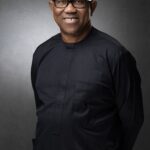


In March 2024, tankers began loading refined fuel at a sprawling complex outside Lagos. For the first time in its history, Nigeria exported gasoline instead of importing it. The man behind that shift is no other man but Aliko Dangote. He had spent nine years and roughly $20 billion building a single refinery to force that outcome. It didn’t happen by accident. It happened because a teenager who once borrowed money from his uncle to sell cement by the bag had, five decades later, decided to bet his entire fortune on Africa refining its own oil.
That refinery is now the centerpiece of a conglomerate spanning cement, sugar, salt, fertilizer, and petrochemicals. As of mid-2026, Bloomberg places Dangote’s net worth near $35.9 billion, making him not just Africa’s richest man but one of the fastest-growing fortunes on the planet this year. To understand how he got there, you have to start decades earlier, in a trading compound in Kano.
Early Life and the Roots of a Trading Empire of Aliko Dangote
See also: http://Novaline.com.ng
Cyril Ramaphosa: South Africa’s President and Master Negotiator
Aliko Dangote was born on April 10, 1957, in Kano, northern Nigeria, into a family already steeped in commerce. His great-grandfather, Alhassan Dantata, had been one of West Africa’s wealthiest traders in the early twentieth century. Money, however, wasn’t handed to young Aliko outright. At age 21, he borrowed roughly 500,000 Naira from an uncle. He used it to import bags of cement and sell them in bulk to construction firms across Kano. The margins were thin, and the risks were real. Currency shifts, port delays, and unreliable shipping routes could wipe out a shipment’s profit overnight. Dangote treated those risks as a puzzle rather than a deterrent. He learned to exploit price gaps between international commodity markets and Nigeria’s import-starved economy. That instinct for arbitrage, buying where goods were cheap and selling where demand was desperate, became the foundation of everything that followed.
From Cement Bags to Commodity Trading
By the mid-1980s, Dangote had expanded far beyond cement. He was importing rice, sugar, and textiles, moving container loads through Lagos ports and reselling them across Nigeria’s fragmented retail networks. Meanwhile, Nigeria’s military governments were tightening import restrictions, which squeezed smaller traders out of the market entirely. Dangote adapted quickly. He built relationships with shipping lines and secured import licenses that smaller competitors couldn’t obtain. As a result, his trading company outgrew nearly every rival in the sector within a decade. That scale gave him something more valuable than profit: leverage over Nigeria’s supply chains.
The Pivot From Trading to Manufacturing
Trading built Dangote’s initial fortune, but it also exposed its ceiling. Import tariffs could change overnight. Currency devaluations could gut margins in a single quarter. Dangote recognized that a business dependent on shipping other people’s products would always be vulnerable to policies he didn’t control. So in the late 1990s, he shifted strategy entirely. Rather than import sugar, he built refineries to process raw sugar domestically. Rather than import cement, he built cement plants. The Obajana Cement Plant, commissioned in 2007 in Kogi State, became one of the largest in the world at the time, with capacity exceeding 10 million tonnes annually. This wasn’t a small pivot. Manufacturing required capital far beyond what trading demanded, along with patience that most Nigerian businesses of that era simply didn’t have. However, Dangote understood something crucial: whoever controlled production controlled pricing, and whoever controlled pricing controlled the market.
Aliko Dangote and the Rise of Dangote Cement
Dangote Cement went public on the Nigerian Stock Exchange in 2010, and its growth since then has been extraordinary. The company now operates plants across more than ten African countries, including Senegal, Zambia, Ethiopia, and Cameroon. Consequently, it holds the position of Africa’s largest cement producer by a wide margin. In 2025, Dangote Cement doubled its profits to a record one trillion Naira. Shares surged nearly 69% within a year, according to Forbes’ 2026 Africa Billionaires report. That performance alone added billions to Dangote’s personal fortune, even before accounting for his other ventures.
Building the Industrial Empire
Cement gave Dangote scale, but oil gave him leverage over an entire continent’s energy security. Nigeria, despite being one of Africa’s largest crude producers, had spent decades importing refined petroleum products because it lacked sufficient domestic refining capacity. Dangote saw the absurdity in that arrangement and decided to fix it himself. Construction on the Dangote Petroleum Refinery began in 2016 on a site near Lagos. The project faced repeated delays, cost overruns, and skepticism from analysts who doubted it would ever run at scale. Still, Dangote pushed forward, eventually spending close to $20 billion, making it one of the largest single-train refineries ever built anywhere in the world.
The Refinery That Changed Nigeria’s Trade Balance
The facility began meaningful production in 2024, with capacity to process 650,000 barrels of crude per day. By early 2026, Nigeria had become a net exporter of refined fuel for the first time in its history. That shift alone reshaped regional energy markets across West Africa. Furthermore, the refinery’s success has become the primary driver of Dangote’s recent wealth surge. His fortune has climbed from roughly $30.4 billion at the start of 2026 to nearly $36 billion by May, according to Bloomberg’s tracking. Analysts point directly to refinery output and export volumes as the engine behind that gain.
How Aliko Dangote Expanded Beyond Nigeria’s Borders
Dangote hasn’t stopped at Nigeria’s coastline. In 2026, he announced plans to replicate the refinery model in East Africa, appearing alongside Kenyan President William Ruto and Ugandan President Yoweri Museveni to discuss a regional refining complex. The proposal would give landlocked and coastal East African nations a domestic alternative to imported fuel. Meanwhile, Dangote Group signed a $400 million deal with a Chinese machinery firm to accelerate plans to double the Lagos refinery’s capacity by 2029. In addition, he has explored an investment vehicle that would let ordinary African savers buy into Dangote Group companies and collect dividends in dollars. Each move reflects the same underlying pattern: identify a structural gap in African supply chains, then build the infrastructure to close it.
Global Economic Impact and What Comes Next
Dangote’s businesses now employ tens of thousands of workers directly, with hundreds of thousands more supported indirectly through supply chains. His companies pay substantial federal taxes in Nigeria; Dangote Cement alone contributed over 412 billion Naira in taxes between 2020 and 2022. That figure underscores how central his companies have become to national revenue.
Beyond Nigeria, his influence now touches cement markets in more than a dozen African countries and fuel markets across an entire region. In addition, Dangote has floated plans for a secondary listing of Dangote Cement in London, which would open the company to a broader base of international investors.
Critics note that Dangote’s dominance raises legitimate questions about market concentration and pricing power in sectors where he faces limited competition. Supporters counter that his infrastructure investments have done what decades of government policy failed to achieve: reducing Africa’s dependence on imported fuel and cement. Both views carry weight, and the debate is likely to continue as his refining ambitions expand into new countries. What began with borrowed money and bags of cement in Kano has become a conglomerate reshaping how an entire continent buys fuel, builds roads, and feeds itself. Aliko Dangote’s next moves, particularly in East Africa, will determine whether that model scales beyond Nigeria’s borders or remains a singular national success story.