
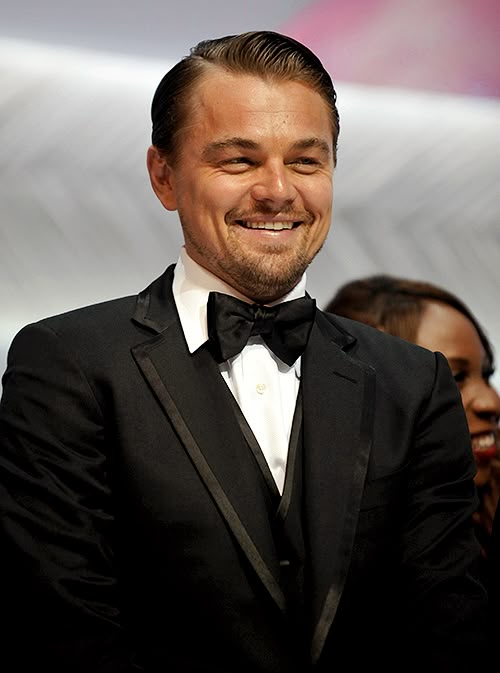

The Screen’s Ultimate Chameleon
Leonardo DiCaprio chewed through freezing rivers, slept inside animal carcasses, and forced himself to swallow raw bison liver while filming The Revenant. Years later, he would erupt across the screen with another emotionally volcanic performance, proving yet again that comfort has never interested him. Every role seems to demand another layer of physical endurance, another psychological excavation.
That intensity is the closest the public has ever come to meeting the real Leonardo DiCaprio.
He is among the most recognizable faces on Earth, yet remains remarkably unknowable. For more than three decades, the Oscar-winning actor has resisted turning himself into a brand built on overexposure. Instead, he has let the work speak first, whether portraying obsessive visionaries, con artists, addicts, billionaires, or broken dreamers. Any definitive Leonardo DiCaprio biography eventually arrives at the same conclusion: beyond the fame is an artist who has spent his entire career protecting his private life while relentlessly exposing the emotional lives of everyone else.
Leonardo DiCaprio: The Boy Who Refused to Be a Product
Long before global fame, DiCaprio was simply a kid growing up in Echo Park, Los Angeles, surrounded by artists rather than executives.
Born on November 11, 1974, to George DiCaprio, an underground comic book distributor and writer, and Irmelin Indenbirken, a legal secretary with deep faith in her son’s talent, Leonardo grew up in an unconventional household where creativity mattered more than convention. Although his parents separated early, they remained united around one mission: giving their son every opportunity to pursue acting.
Gritty Roots and Early Breakthroughs
The neighborhood wasn’t glamorous. In fact, Echo Park in the 1970s carried grit and uncertainty. Consequently, those surroundings quietly shaped DiCaprio’s fascination with characters living on society’s margins. He has often gravitated toward people who are desperate, ambitious, morally conflicted, or quietly unraveling.
Initially, his first jobs were television commercials.
Then came sitcom appearances.
Eventually, the major breakthrough arrived.
In What’s Eating Gilbert Grape, he transformed into Arnie Grape with astonishing emotional precision. At just nineteen years old, he earned his first Academy Award nomination, signaling that Hollywood wasn’t simply looking at another handsome newcomer. Instead, it was watching an actor capable of disappearing inside another human being.
The Phenomenon of Leo-Mania
See also: http://Novaline.com.ng
He doubled down with The Basketball Diaries, playing addiction with frightening vulnerability, and followed with Romeo + Juliet, where youthful charisma collided with Shakespearean tragedy.
Then came Titanic.
James Cameron’s epic did more than become a box office phenomenon; indeed, it detonated into a cultural event unlike almost anything modern Hollywood had witnessed. Suddenly, the Titanic star wasn’t simply famous. He was everywhere.
- Magazine covers.
- Screaming crowds.
- Merchandise.
An entire generation was experiencing what became known as “Leo-mania.” For many actors, that kind of overwhelming success becomes a permanent identity.
Leonardo DiCaprio Dismantling the Heartthrob Image
DiCaprio, however, rejected it.
Instead of chasing romantic blockbusters, he deliberately pivoted toward morally complicated adults. For instance, he chose Martin Scorsese’s violent historical drama Gangs of New York. Furthermore, he balanced charm and deception in Steven Spielberg’s Catch Me If You Can.
Ultimately, these weren’t safe career moves. They were calculated attempts to dismantle the heartthrob image before it hardened into a cage. That refusal to become a commercial product would define every decade that followed.
The Muse and the Master: A Creative Obsession
Some artistic partnerships feel inevitable only in hindsight.
The relationship between Leonardo DiCaprio and Martin Scorsese belongs in that category.
Their collaborations aren’t simply recurring projects. They are ongoing conversations about obsession, power, greed, guilt, and the darker corners of the American dream.
Together they have built one of cinema’s defining actor-director partnerships through films including:
- Gangs of New York
- The Aviator
- The Departed
- Shutter Island
- The Wolf of Wall Street
- Killers of the Flower Moon
These Martin Scorsese collaborations reveal a fascinating pattern.
Howard Hughes cannot stop chasing perfection.
Teddy Daniels cannot escape memory.
Jordan Belfort mistakes excess for freedom.
Ernest Burkhart chooses loyalty over conscience until morality finally catches him.
Each man believes he controls his destiny.
Each slowly loses control.
DiCaprio rarely plays heroes in the traditional sense. He gravitates toward characters whose greatest enemy lives inside their own minds. Rather than polishing flaws away, he enlarges them. His performances become studies in obsession, where tiny physical choices tell enormous emotional stories.
Watch his restless hands.
Notice the sudden shifts in breathing.
See how his eyes constantly calculate, panic, seduce, or fracture.
He acts with movement as much as dialogue.
That commitment often demands extraordinary physical endurance.
For The Revenant, freezing temperatures became part of the performance. He endured icy rivers, harsh wilderness conditions, and physically exhausting filming schedules that stretched for months. The hardship wasn’t marketed as spectacle. It became another instrument for reaching emotional truth.
When he finally won the Academy Award for Best Actor, the Oscar recognized more than one extraordinary performance. It acknowledged decades of choosing difficult roads over easy victories.
The Earth First: A Parallel Legacy
Many celebrities discover activism after reaching superstardom.
DiCaprio’s environmental commitment began much earlier.
Long before becoming an Academy Award winner, he was speaking publicly about climate change, biodiversity loss, and ocean conservation. Environmental concern wasn’t an accessory to his career. It became one of its defining pillars.
His foundation, established in 1998, has supported conservation initiatives across the globe, while his production company, Appian Way Productions, has increasingly invested in documentaries examining ecological crises and environmental justice.
Among the projects connected to his environmental mission are documentaries exploring:
- Climate change
- Wildlife conservation
- Ocean health
- Indigenous communities
- Sustainable food systems
- Global biodiversity
This dimension of Leonardo DiCaprio environmental activism reflects the same long-game thinking visible throughout his acting career.
He rarely seeks quick headlines.
Instead, he backs researchers, filmmakers, conservationists, and organizations working far from red carpets.
His speeches often return to a single conviction: environmental collapse is not a distant possibility but a present reality demanding political and economic action.
For DiCaprio, activism is not separate from storytelling.
It is another form of storytelling.
Breaking the Rules in the Modern Era
For decades, Leonardo DiCaprio quietly maintained one remarkable career rule.
No sequels.
While much of Hollywood embraced sprawling cinematic universes and recurring franchises, he consistently pursued original stories.
That makes his decision to join Heat 2 especially significant.
Michael Mann’s long-awaited continuation of the crime saga is expected to feature DiCaprio as Chris Shiherlis, the character originally portrayed by Val Kilmer, alongside Christian Bale in one of contemporary cinema’s most anticipated ensemble casts. For many observers, the Heat 2 cast represents more than a reunion with an iconic film. It signals that DiCaprio believes the story justifies breaking one of the industry’s longest-standing personal traditions.
Even now, his filmography remains remarkably selective.
Directors know that attaching Leonardo DiCaprio immediately transforms industry conversations.
Studios become willing to finance ambitious adult dramas.
Awards attention follows.
Audiences trust that unusual stories deserve their time.
He has become something increasingly rare in modern Hollywood.
Not merely a leading man.
A green light.
In an era increasingly driven by intellectual property, algorithms, and franchise expansion, DiCaprio still wagers on filmmakers, scripts, and difficult characters.
That may be his boldest career choice of all.
Leonardo DiCaprio: The Quiet Legend
Hollywood has produced countless celebrities.
Far fewer become enduring movie stars.
Leonardo DiCaprio belongs to an increasingly endangered tradition: performers whose names alone create anticipation without relying on capes, cinematic universes, or nostalgia-driven franchises. His career has been built not on repetition but reinvention.
His Hollywood legacy reaches beyond awards or box office milestones. It lives in the risks he repeatedly chose when safer paths promised easier rewards. It lives in the obsessive characters he inhabited until audiences could almost feel their pulse. His Hollywood Legacy lives in the filmmakers who found in him a collaborator willing to venture into emotional places many stars avoid.
Whether audiences remember him first as the Titanic star, an Oscar-winning actor, a fearless collaborator in the defining Martin Scorsese collaborations, or a relentless advocate for climate action, the larger picture remains remarkably consistent.
Leonardo DiCaprio has spent his career refusing to become predictable.
That refusal, more than any single performance, may ultimately define the man behind one of cinema’s most familiar faces.