
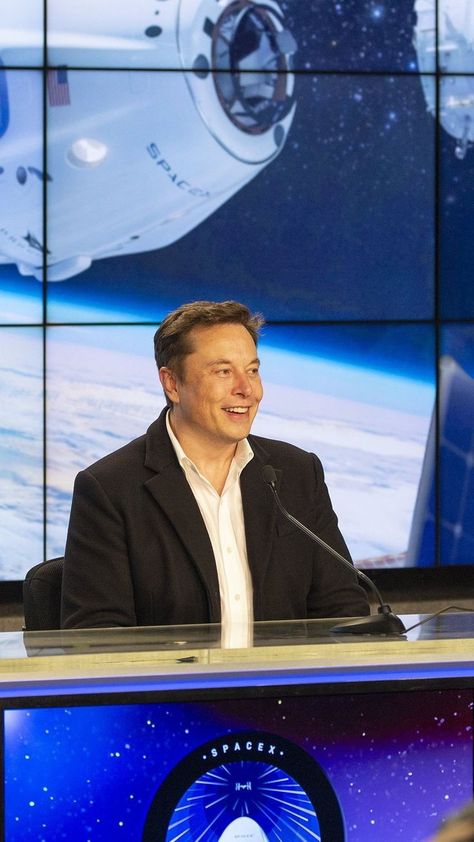

Inside the mind of Elon Musk — the SpaceX founder and Tesla CEO who turned a childhood spent buried in books into the first trillion-dollar personal fortune in human history.
Nobody hands you a trillion dollars. You have to be reckless enough to chase it and stubborn enough to survive the years when it looks like a delusion. Elon Musk’s history is really a history of tolerance — for risk, for ridicule, for the kind of physical and financial pain that makes most people quit. Understanding the Elon Musk net worth headline requires understanding the boy who built it, decades before anyone was counting.
T-Minus: The Countdown Begins
See also: http://Novaline.com.ng
The Quiet Engineer Who Rewrote the Internet: The Untold Story of Sundar Pichai
Elon Musk grew up in Pretoria, South Africa, the son of an engineer father and a Canadian-born model and dietitian mother. School was brutal. He read constantly, sometimes an entire encyclopedia set for lack of anything better to absorb, and he took beatings for it — once hospitalized after classmates threw him down a flight of stairs. Bullying didn’t soften him. It seems to have done the opposite, hardening a belief that the world’s rules were negotiable and that physical or social pain was simply a cost of doing business.
At ten, he taught himself to code on a Commodore VIC-20. At twelve, he sold a video game called Blastar to a computer magazine for roughly $500 — a child already treating imagination as inventory. By 1988, at seventeen, he left South Africa for Canada using his mother’s citizenship, partly to dodge mandatory service in the apartheid-era military. He worked odd jobs, cleared out grain silos with a shovel, before landing at Queen’s University and later transferring to the University of Pennsylvania for physics and economics. The combination mattered: physics gave him a method, economics gave him a market.
Ignition: The Dot-Com Millions
Musk’s first company, Zip2, mapped businesses onto early internet directories — a primitive Google Maps for the Yellow Pages era. Compaq bought it in 1999 for roughly $307 million, and Musk walked away with about $22 million at twenty-seven. He put almost all of it into his next bet: X.com, an online bank that eventually merged with a rival and became PayPal. When eBay acquired PayPal in 2002, Musk’s cut came to $180 million.
That payout is where the popular story usually stops — young founder cashes out, buys a mansion, coasts. Musk did the opposite. He shoved nearly the entire sum into two ventures that industry veterans considered close to insane:
- SpaceX, founded in 2002, aiming to make rockets reusable in an industry that had never done it at scale.
- Tesla, which he backed in 2004, betting that lithium-ion batteries could replace a century of internal combustion.
By 2008, both companies were weeks from bankruptcy simultaneously. Musk was reportedly sleeping on the SpaceX factory floor and borrowing money for rent. A Falcon 1 rocket failure on the fourth attempt would have ended SpaceX outright; it succeeded, narrowly, days before the company ran out of cash. That near-death year is arguably the hinge of his entire biography — proof, to Musk and later to investors, that near-collapse was survivable if you refused to blink.
Max-Q: SpaceX and Tesla Under Pressure
In aerospace, “Max-Q” is the point of maximum aerodynamic stress on a rocket during ascent — the moment the vehicle is most likely to tear itself apart. It’s an apt description of Musk’s decade running both a rocket company and a car company at once, often sleeping at the factory during production crunches he called “manufacturing hell.”
SpaceX solved a problem the entire aerospace establishment had written off: landing an orbital-class booster upright so it could fly again. Reusability collapsed the cost of reaching orbit and turned SpaceX into NASA’s primary ride to the International Space Station. Tesla, meanwhile, dragged the auto industry into electrification against its will, forcing legacy manufacturers who had spent decades dismissing EVs as a niche to build competing lineups almost overnight.
Neither win came cleanly. Tesla’s Model 3 production line became a cautionary tale of over-automation before Musk himself admitted the robots were the problem, not the fix. Musk added The Boring Company, born from a joke about Los Angeles traffic, and Neuralink, a brain-implant venture, to an already improbable stack of simultaneous obsessions.
First Principles, in Plain English
Engineering Log — MethodMusk’s most quoted mental model is deceptively simple: stop reasoning by analogy — “we’ve always done it this way” — and instead break a problem down to the raw physical facts that are undeniably true, then rebuild your answer from there. Applied to rockets, this meant ignoring what a Falcon 9 traditionally cost and instead pricing the raw aluminum, copper, and carbon fiber inside it. The materials cost a fraction of the sticker price; the gap was labor, tradition, and margin. That gap became the design brief. Applied to Tesla, it meant asking what a battery cell is actually made of — cobalt, nickel, lithium, carbon — buying those elements on commodity markets, and building factories instead of accepting supplier quotes as fixed truth.
It’s a method any founder can borrow: list your assumptions, delete the ones that are habit rather than physics, and price only what’s left.
I could either watch it happen or be a part of it.Elon Musk, on why he chose to build rather than invest from the sidelines
Orbital Insertion: X, xAI, and the Trillion-Dollar Orbit
Musk’s 2022 purchase of Twitter for $44 billion looked, at the time, like the first genuinely erratic decision of his career — a $44 billion mood swing rather than a strategy. He gutted staff, rebuilt the platform’s trust-and-safety systems around his own instincts, and renamed it X in 2023. Critics called it value destruction. Musk called it a foundation: raw, unfiltered human conversation, which is exactly the fuel his AI company, xAI, needed to train its chatbot Grok.
In 2025, xAI absorbed X outright. In February 2026, SpaceX absorbed xAI in turn, folding the rocket company, the AI lab, and the social network into a single entity valued near $1.25 trillion. That consolidation set up the moment that redefined personal wealth records: SpaceX’s June 2026 initial public offering priced at $135 a share, valuing the company near $1.77 trillion and instantly making Musk the first individual in recorded history worth more than $1 trillion.
The period wasn’t free of turbulence. Musk spent part of 2025 running the Department of Government Efficiency inside the Trump administration, an experiment in slashing federal spending that ended in a very public falling-out with the president over deficit legislation. xAI weathered its own storm too — a wave of senior departures, government scrutiny over Grok-generated content, and Musk’s own admission on X that the AI company needed to be “rebuilt from the foundations up.” He said the quiet part that most CEOs never would: that a flagship product was built wrong the first time.
That willingness to say the uncomfortable thing in public, good or embarrassing, is arguably as central to the Musk brand as any rocket landing.
The Paradoxes That Define Elon Musk
- Public vulnerability, private control. He posts personal struggles and family disputes to hundreds of millions of followers, yet insists on absolute control over every company he touches.
- Deadline optimism, delivery reality. Self-driving cars, Mars colonization, and AI timelines have consistently arrived years behind his own predictions — and investors keep betting on the next one anyway.
- Unfiltered instinct, engineering discipline. The same person who tweets impulsively can spend a night personally redesigning a rocket engine part on a factory floor.
Frequently Asked Questions About Elon musk
What is the net worth of Elon Musk in 2026?
Estimates place his net worth above $1 trillion following SpaceX’s June 2026 IPO, though Bloomberg and Forbes figures can diverge by tens of billions depending on how they value his SpaceX and xAI stakes, which are not fully liquid.
Which companies has Elon Musk founded or led?
Zip2, X.com/PayPal, SpaceX, and xAI as founder; Tesla as CEO since 2008; The Boring Company and Neuralink as founder; and X (formerly Twitter), which he acquired and later folded into xAI.
What does “first principles thinking” mean in practice?
It means stripping a problem down to verifiable physical facts rather than industry convention, then rebuilding a solution from those facts alone — the approach behind SpaceX’s reusable rockets and Tesla’s in-house battery production.